
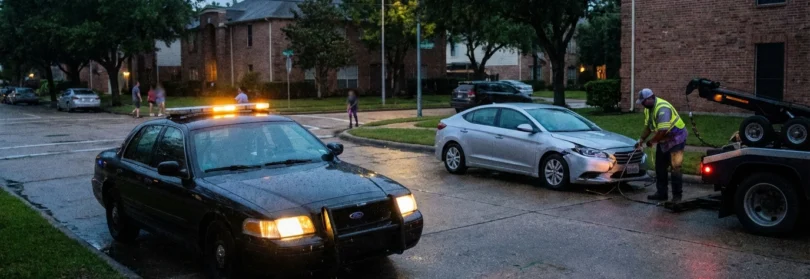
A drunk driving crash in Houston can change your life in an instant. Victims often face catastrophic injuries, mounting medical bills, long-term rehabilitation, lost income, and profound emotional suffering. Understanding what happens legally and practically after a DWI accident in Houston is the first step toward holding the at-fault driver accountable and pursuing the compensation your family needs.
If you or a loved one suffered serious injuries in a drunk driving crash, Fibich, Leebron, Copeland & Briggs is prepared to fight for the full value of your claim. Call 713-751-0025 or contact us today for a confidential case evaluation.
Immediate Legal Obligations at the Scene of a Houston Drunk Driving Crash
Texas law imposes strict duties on every driver involved in a collision that results in injury or death. Under Texas Transportation Code § 550.021, drivers must immediately stop at the scene, remain until all legal obligations are fulfilled, and avoid obstructing traffic more than necessary.
Drivers must exchange information and render aid to anyone who is hurt. Texas Transportation Code § 550.023 requires each driver to provide their name, address, vehicle registration number, insurance information, and driver’s license if requested. Drivers must also provide reasonable assistance to injured persons, including arranging transport to a hospital if necessary or requested.
When law enforcement arrives, the investigation begins immediately. Under Texas Transportation Code § 550.041, a peace officer may investigate and file justifiable charges. If the crash is not investigated by law enforcement, Texas Transportation Code § 550.061 requires the vehicle operator to file a written accident report when injury or death results.
💡 Pro Tip: Preserve every piece of evidence from the scene. Photographs of vehicle damage, skid marks, debris, and the other driver’s condition can become critical evidence when proving intoxication and negligence.

How Texas Defines DWI and Why It Matters for Your Injury Claim
A driver commits Driving While Intoxicated under Texas Penal Code § 49.04 when they operate a motor vehicle with a blood alcohol concentration of 0.08% or higher, or when they lack the normal use of mental or physical faculties due to alcohol or drugs. A BAC at or above 0.08% establishes intoxication as a matter of law, which can significantly strengthen a victim’s civil claim for damages.
Criminal charges and a civil lawsuit are two separate legal tracks. A criminal DWI prosecution is brought by the State of Texas and may result in fines, license suspension, or incarceration. Your civil injury claim focuses on recovering compensation for medical expenses, lost wages, future earning capacity, and pain and suffering. A criminal conviction is not required to prevail in a civil case, though it serves as powerful evidence of negligence.
💡 Pro Tip: Do not assume the criminal case will resolve your financial losses. Criminal courts focus on punishment, not victim compensation. Filing a civil claim is the only way to recover damages for catastrophic injuries and long-term care needs.
Who Can Be Held Liable Beyond the Drunk Driver?
Serious drunk driving cases in Houston often involve more than one liable party. While the intoxicated driver bears primary responsibility, Texas law allows victims to pursue claims against other parties whose conduct contributed to the crash. Identifying every source of liability is essential to maximizing recovery, particularly when the at-fault driver carries minimal insurance.
The Texas Dram Shop Act
Under the Texas Alcoholic Beverage Code § 2.02, known as the Texas Dram Shop Act, a bar, restaurant, or liquor store may be held liable if they served alcohol to a person who was obviously intoxicated to the extent that the person presented a clear danger to themselves and others, and that intoxication was a proximate cause of the damages suffered. This creates a powerful avenue of recovery for victims. A drunk driver injury claim that includes a dram shop defendant can substantially increase total compensation. However, establishments may assert a “safe harbor” defense under Texas Alcoholic Beverage Code § 106.14 if they required TABC-approved seller training and did not encourage violations.
Other Potentially Liable Parties
Additional defendants may include employers or vehicle owners. If the drunk driver was operating a commercial vehicle or was on the job, the employer may share liability under respondeat superior. An adult who provides alcohol to a minor under age 18 may face civil liability under Texas Alcoholic Beverage Code § 2.02(c). Each additional defendant represents another insurance policy and another opportunity to secure meaningful compensation.
💡 Pro Tip: Dram shop claims require evidence that the establishment served a visibly intoxicated patron. Surveillance footage, server testimony, and credit card receipts showing extensive alcohol purchases are critical evidence your legal team should pursue quickly before they are destroyed.
Statute of Limitations: Deadlines That Can End Your Case
Texas imposes strict filing deadlines on drunk driving victim rights, and missing them can permanently bar your claim. Under Texas Civil Practice and Remedies Code § 16.003, the statute of limitations for personal injury, property damage, and wrongful death claims is two years from the date of the accident.
| Claim Type | Statute of Limitations | Authority |
|---|---|---|
| Personal Injury | 2 years from date of injury | Tex. Civ. Prac. & Rem. Code § 16.003(a) |
| Property Damage | 2 years from date of damage | Tex. Civ. Prac. & Rem. Code § 16.003(a) |
| Wrongful Death | 2 years from date of death | Tex. Civ. Prac. & Rem. Code § 16.003(b) |
Failure to file within these deadlines generally results in dismissal regardless of how strong the evidence may be. If you do not file your lawsuit during the statute of limitations period, you will likely not be able to pursue your claim in court.
Tolling Exceptions Under Texas Law
In limited circumstances, Texas law provides tolling exceptions that may pause or extend the filing deadline. These include situations involving minority or mental incapacity, where the statute may not begin to run until the minor turns 18 or the incapacitated person regains capacity. However, courts interpret these exceptions narrowly.
💡 Pro Tip: Even if a tolling exception may apply, do not wait. Preserving evidence, securing witness statements, and building a strong case all become more difficult over time. Acting early gives your legal team the best opportunity to maximize your recovery.
Damages You May Recover After a Serious DWI Accident in Houston, Texas
Victims of drunk driving crashes in Houston may be entitled to substantial compensation, particularly when injuries are life-altering. Texas law allows recovery for both economic and non-economic damages. The full scope of damages depends on the severity of injuries and long-term impact on the victim and their family.
Recoverable damages in a Texas drunk driving lawsuit may include:
- Past and future medical expenses, including surgeries, rehabilitation, and long-term care
- Lost wages and diminished future earning capacity
- Physical pain and mental anguish
- Loss of consortium for spouses and family members
- Funeral and burial expenses in wrongful death cases
- Punitive damages against the intoxicated driver in cases involving gross negligence or intoxication
For families dealing with permanent disability, traumatic brain injuries, or spinal cord damage, the financial impact can reach into the millions over a lifetime. Future medical care costs and lost earning capacity often represent the largest components of a serious case.
Protecting Your Claim: Steps to Take After a Houston Drunk Driving Accident
What you do in the days and weeks following a crash directly affects the strength of your case. Insurance companies will move quickly to minimize or deny your claim. Taking the right steps early can make the difference between a lowball settlement and full accountability.
First, seek medical treatment immediately and follow through with all recommended care. Gaps in treatment give insurance adjusters ammunition to argue that your injuries are not serious. Second, avoid giving recorded statements to the other driver’s insurance company without legal guidance. Knowing what not to say to an insurance adjuster can protect your claim.
Third, document everything. Keep records of all medical visits, prescriptions, out-of-pocket costs, missed workdays, and communications with insurance companies. This documentation forms the foundation of your damage claim.
💡 Pro Tip: Be cautious about posting on social media after a crash. Insurance defense teams routinely monitor victims’ accounts for photographs or statements they can use to challenge injury claims.
Frequently Asked Questions
1. How long do I have to file a drunk driving injury lawsuit in Houston?
Under Texas Civil Practice and Remedies Code § 16.003, you generally have two years from the date of the accident to file a personal injury, property damage, or wrongful death claim. Missing this deadline typically results in dismissal.
2. Can I sue a bar that served the drunk driver?
Yes, under the Texas Dram Shop Act (Texas Alcoholic Beverage Code § 2.02), bars, restaurants, and liquor stores may be held liable if they served alcohol to a person who was obviously intoxicated to the extent that the person presented a clear danger, and that intoxication proximately caused the damages. These claims require specific evidence of visible intoxication at service and are subject to potential safe harbor defenses.
3. What if the drunk driver did not have insurance?
You may still have options for recovery. Your own uninsured/underinsured motorist (UM/UIM) coverage can provide compensation when the at-fault driver lacks adequate insurance. Additionally, if a bar or third party contributed to the crash, those defendants may carry their own liability policies.
4. Do I need to wait for the criminal DWI case to finish before filing a civil lawsuit?
No, the civil and criminal proceedings are independent. You should file your civil claim promptly to preserve evidence and meet the statute of limitations. A criminal conviction can strengthen your civil case but is not a prerequisite for recovering damages.
5. What types of compensation can I recover after a drunk driving crash?
Texas law allows victims to seek economic damages such as medical bills, lost wages, and future care costs, as well as non-economic damages for pain and suffering. In cases involving intoxication, courts may also award punitive damages against the intoxicated driver to punish reckless conduct.
Take Action to Protect Your Rights After a Houston Drunk Driving Crash
A drunk driving crash can leave victims facing permanent disabilities, overwhelming medical debt, and lost future income. Texas law provides meaningful avenues for holding impaired drivers and other responsible parties accountable, but these rights come with strict deadlines that demand prompt action.
If your family is dealing with the aftermath of a serious DWI car accident, Fibich, Leebron, Copeland & Briggs has the trial experience and resources to pursue full accountability on your behalf. Call 713-751-0025 or reach out online to discuss your case with a Houston drunk driving accident lawyer today.