
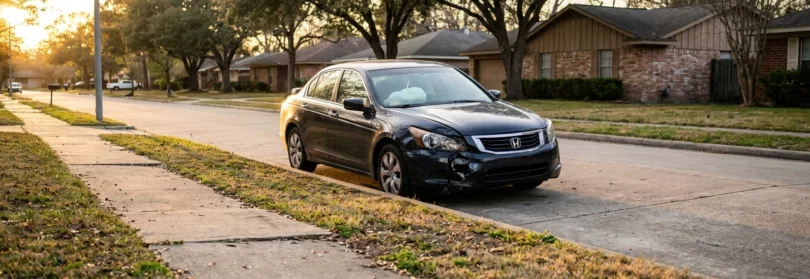
When a Serious Car Crash Disrupts Your Houston Family’s Life
A devastating car crash can change everything for a Houston family in an instant. One moment you are driving home from work, and the next you are facing emergency rooms, mounting medical bills, and questions about how you will pay for it all. Serious collisions involving permanent disabilities, traumatic brain injuries, or loss of a loved one demand more than just filing an insurance claim. They require understanding your legal rights under Texas law, standing firm against aggressive insurance tactics, and securing the compensation your family needs to move forward. Knowing what to do in the critical hours and weeks after a wreck can make or break your ability to recover fair compensation.
If your family is dealing with the aftermath of a serious collision, Fibich, Leebron, Copeland & Briggs is prepared to fight for the outcome you deserve. Call 713-751-0025 or reach out to our team today to discuss your case.
Immediate Steps Houston Families Should Take at the Scene and After
The actions you take in the first hours after a serious car accident in Houston can significantly affect your ability to pursue a claim. Adrenaline can mask severe injuries such as spinal fractures, internal bleeding, or concussions. Seek medical attention immediately, even if you feel fine, because delays give insurance companies an opportunity to argue that your injuries are unrelated to the crash.
At the scene, Texas law gives you the right to request proof of insurance from the other driver. Under Texas Transportation Code § 601.053, operators must provide evidence of financial responsibility to any person involved in a collision or to a peace officer upon request. Obtain this information along with the other driver’s name, contact details, and license plate number. If physically able, photograph the vehicles, road conditions, traffic signals, and any visible injuries.
💡 Pro Tip: Use your phone to take a short video walking around the entire accident scene. Video captures details that photos can miss, such as traffic flow, weather conditions, and debris position.
Documenting Everything From Day One
Start a file immediately and keep every record related to the crash. This includes police reports, medical records, prescription receipts, towing invoices, and insurance correspondence. Write down your account of what happened while details are fresh, and ask passengers to do the same.
How Texas Fault-Based Insurance Laws Affect Your Family’s Claim
Texas is an at-fault state, which means the person who negligently caused the crash bears financial responsibility for resulting damages. Under Texas Transportation Code § 601.051, every motor vehicle operator must maintain financial responsibility. Texas law defines this as the ability to respond in damages for liability arising from vehicle ownership, maintenance, or use under § 601.002.
The state mandates minimum liability coverage of 30/60/25: $30,000 per injured person, $60,000 total per accident, and $25,000 for property damage. For families facing catastrophic injuries with six-figure medical bills, these minimums are often grossly insufficient. When damages exceed the at-fault driver’s policy limits, victims may need to pursue their own Underinsured Motorist (UIM) coverage or file a lawsuit directly against the responsible party. Review the full text of Texas financial responsibility statutes for additional detail.
💡 Pro Tip: Check your auto policy for Uninsured/Underinsured Motorist (UM/UIM) coverage immediately. This optional coverage can pay medical bills, lost wages, and pain and suffering if the at-fault driver carries no insurance or insufficient coverage. Note that UM/UIM in Texas primarily covers bodily injury claims; property damage may require separate Uninsured Motorist Property Damage (UMPD) coverage.
Understanding Liability Beyond the Driver
The person behind the wheel is not always the only accountable party. Under the doctrine of negligent entrustment, a car owner who knowingly entrusted their vehicle to someone without a valid license, someone intoxicated, or a driver with a history of reckless driving could face liability even though the owner was not driving. Identifying every potentially liable party early is essential for maximizing your family’s recovery.
Dealing With Insurance Companies After a Houston Car Wreck
Insurance adjusters are not on your family’s side, no matter how friendly they sound. Their goal is to minimize the payout. You are not legally obligated to provide a recorded statement to the other driver’s insurance company, and doing so before consulting an attorney can seriously weaken your claim. Adjusters may ask leading questions designed to shift blame or minimize injury severity.
Be especially cautious about accepting the first settlement offer. Insurers frequently extend low initial offers to close cases quickly before the full extent of injuries and future medical needs is known. Before signing any release, make sure the offer reflects all compensable damages, including future medical care and long-term lost wages. For more on how insurance claims work after a collision, review available legal resources carefully.
💡 Pro Tip: Never sign a medical authorization form from the opposing insurance company. These broad authorizations can give adjusters access to your entire medical history, which they may use to attribute your injuries to pre-existing conditions rather than the crash.
| Coverage Type | What It Covers | Who It Covers |
|---|---|---|
| Liability (30/60/25 minimum) | Bodily injury and property damage you cause to others | Other drivers, passengers, pedestrians |
| Personal Injury Protection (PIP) | Medical expenses, 80% of lost income, replacement services (e.g., household tasks) | You and your passengers |
| Medical Payments (MedPay) | Medical and funeral bills regardless of fault | You, family members, and passengers |
| UM/UIM (optional) | Bodily injury damages including medical bills, lost wages, and pain and suffering | You, when hit by uninsured/underinsured or hit-and-run driver |
Critical Deadlines: The Texas Statute of Limitations
Time is not on your side after a serious car accident in Houston. Under the Texas Civil Practice and Remedies Code, you generally have two years from the date of the accident to file a lawsuit for both personal injury and property damage. Missing this deadline can permanently bar your family from recovering any compensation.
Courts interpret exceptions to this deadline narrowly. In limited circumstances, such as cases involving minors or defendants who leave the state, the deadline may be extended. However, families should not assume any exception applies without obtaining a legal evaluation.
💡 Pro Tip: Mark the two-year anniversary of your accident date on your calendar immediately. Even if settlement negotiations are progressing, your attorney may need to file a lawsuit before that deadline to preserve your rights.
Why a Car Accident Attorney in Houston Matters for Serious Cases
High-stakes car accident cases involving permanent injuries, complex liability, or corporate defendants demand experienced legal representation. When a commercial trucking company, a rideshare platform like Uber or Lyft, or a vehicle manufacturer is involved, the opposing side will have a team of lawyers working to limit or deny liability.
A Houston car crash lawyer focused on serious injury cases will investigate fault, preserve critical evidence, and calculate the true long-term value of your damages. This includes not just current medical bills but projected future surgeries, physical therapy, lost earning capacity, and the cost of in-home care for permanently disabled family members. Families pursuing car crash compensation in Houston benefit from representation prepared to take cases to trial rather than accept inadequate settlements.
Building a Strong Case for Maximum Recovery
Every serious car accident claim rests on three pillars: proving negligence, establishing causation, and documenting compensable damages. Police reports, medical records, accident reconstruction analysis, and witness testimony all contribute to building a case that can withstand challenges from defense attorneys and insurance carriers. For additional guidance, explore our Houston car accident legal resources.
Frequently Asked Questions
1. What should I do if the at-fault driver has no insurance or minimal coverage?
Filing a Claim With Limited or No Opposing Coverage
If the at-fault driver is uninsured or carries only minimum coverage, your own UM/UIM policy may be your best option for recovery. This coverage pays for bodily injury damages including medical bills, lost wages, and pain and suffering when the responsible driver cannot cover your losses. You may also have the right to file a personal lawsuit against the at-fault driver, though collectability is always a practical consideration.
2. Can I be held responsible if I let someone else drive my car and they caused a crash?
Owner Liability for Permissive Use in Texas
Yes, under the Texas common law doctrine of negligent entrustment, vehicle owners may face liability if they knowingly permitted someone to drive who lacked a valid license, was intoxicated, or had a poor driving record. This applies even if you were not in the vehicle at the time of the crash.
3. How long do I have to file a car accident lawsuit in Texas?
Understanding the Two-Year Filing Deadline
Texas generally imposes a two-year statute of limitations for both personal injury and property damage claims arising from a car accident. This clock starts on the date of the collision. While narrow exceptions may exist, courts do not apply them broadly, and waiting until close to the deadline can limit your legal options.
4. Should I give a recorded statement to the other driver’s insurance company?
Protecting Yourself From Adjuster Tactics
You are under no legal obligation to provide a recorded statement to the at-fault driver’s insurer. Adjusters are trained to frame questions in ways that may undermine your claim. Consult with an attorney before engaging in any recorded communication with an opposing insurance company. Note that your own insurer’s policy may require your cooperation as a condition of coverage.
5. What types of compensation can my family pursue after a serious crash?
Damages Available Under Texas Car Accident Claims
Families affected by a serious collision may be entitled to compensation for current and future medical expenses, lost wages, loss of earning capacity, pain and suffering, and property damage. In cases involving permanent disability or wrongful death, the financial impact can extend over a lifetime. Personal Injury Protection (PIP) coverage pays medical expenses, 80% of lost income, and replacement services costs, while Medical Payments coverage handles medical and funeral bills regardless of fault.
Protecting Your Family’s Future After a Devastating Crash
A serious car crash creates financial, physical, and emotional burdens that can follow a Houston family for years. Understanding your rights under Texas law, documenting every detail, respecting critical deadlines, and refusing lowball insurance offers are essential steps toward a fair outcome. The difference between families who recover meaningful compensation and those who settle for far less often comes down to how quickly they act and whether they have the right legal team fighting on their behalf.
Fibich, Leebron, Copeland & Briggs has a proven track record of holding negligent parties accountable in high-stakes car accident cases across Houston and throughout Texas. If your family is facing life-altering injuries and mounting financial pressure, call 713-751-0025 or contact us now for a confidential case evaluation.