
Why the First Hours After a Rig Blast Decide Your Case
Key Takeaways: Evidence after a Houston oil field explosion vanishes quickly, damaged equipment is removed, debris cleared, and footage overwritten within days. To protect your claim, identify the operator, secure the scene, gather witness statements and medical records, and obtain mandatory production logs held by the Texas Railroad Commission. Texas law requires this documentation to exist and bars employers from shifting injury-reporting duties. Most oilfield injury and wrongful death claims face a two-year statute of limitations, while defective-equipment claims carry a 15-year statute of repose. Because explosions often involve multiple liable parties, operators, contractors, manufacturers, and vendors, early documentation reveals the full scope of responsibility.
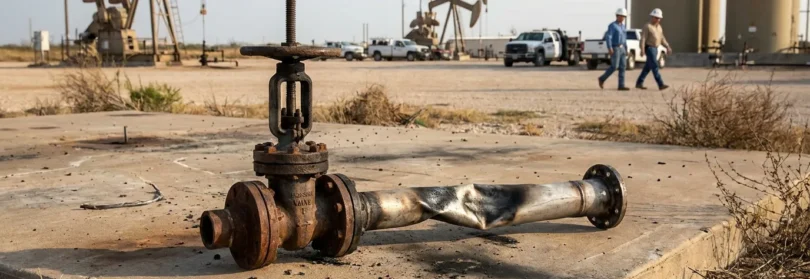
Evidence after a Houston oil field explosion disappears faster than most injured workers realize. Within days, damaged equipment is hauled off, debris is cleared, and surveillance footage is overwritten. For workers facing burns, crush injuries, or blast trauma, that vanishing proof can mean the difference between a documented claim and an uphill fight. Acting quickly to preserve the scene, secure records, and identify every liable party protects both your health and your legal rights.
If you or a loved one suffered catastrophic harm in a rig blast, the team at Fibich, Leebron, Copeland & Briggs is ready to help. Call us at 713-751-0025 or reach out through our confidential case review form to discuss protecting critical evidence today.
The High Stakes Behind Oilfield Explosion Evidence
Catastrophic oilfield explosions rarely produce simple cases. A single blast can cause third-degree burns, traumatic amputations, spinal injuries, and toxic inhalation that leave workers permanently disabled. These high-stakes matters often involve corporate defendants, multiple contractors, and equipment manufacturers sharing responsibility. Preserving evidence early reveals the full scope of that liability.
Permanent disability often ends field careers entirely, eliminating earning capacity and forcing dependence on long-term care. Quantifying those damages requires documentation gathered while evidence is fresh. The stronger the preserved record, the clearer the path toward meaningful accountability.
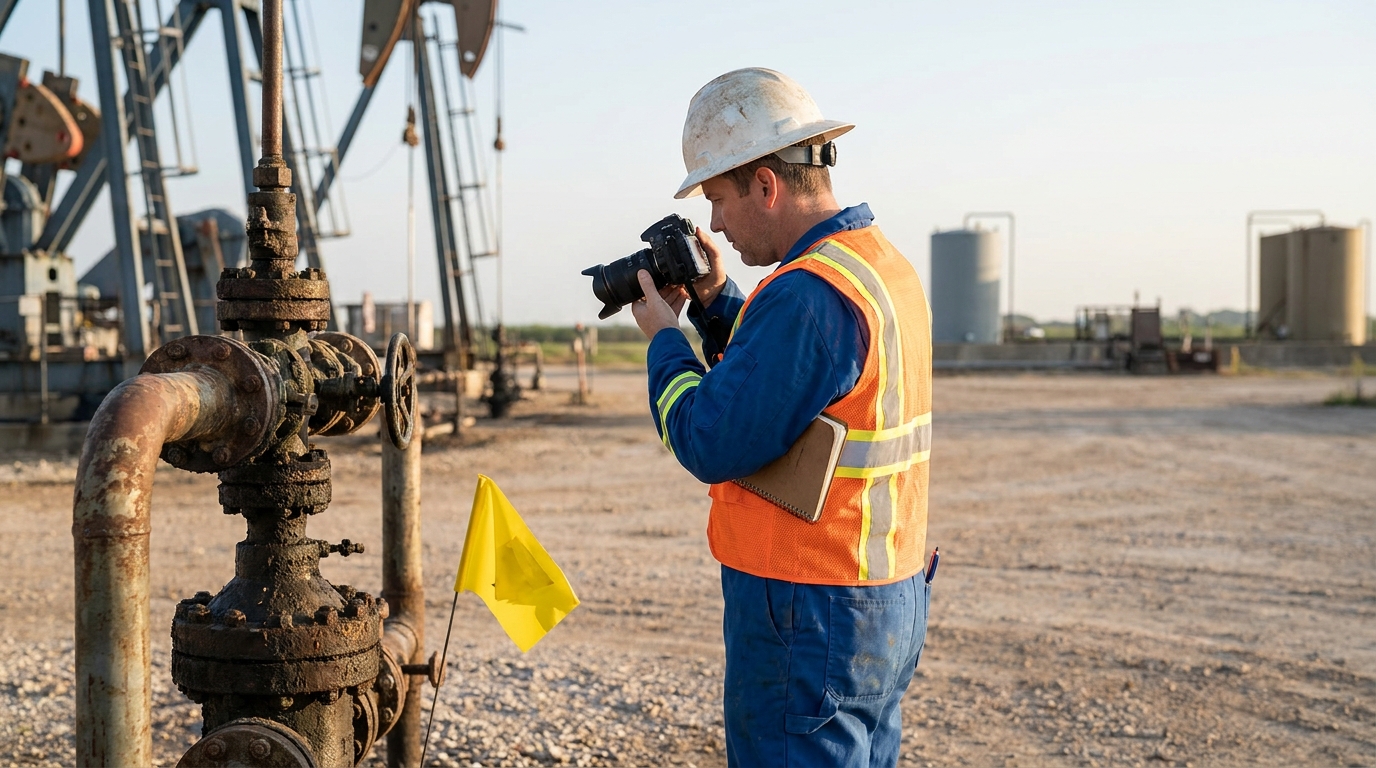
💡 Pro Tip: Photograph everything you safely can immediately after an incident, including equipment tags, gauges, and injuries, and back images up to cloud storage.
What Counts as Evidence in a Texas Oilfield Explosion Claim
Evidence extends far beyond physical wreckage. A thorough investigation pulls together proof that reveals how institutional safety failures occurred and who controlled the conditions that allowed them.
Key evidence categories include:
- Physical well-site equipment such as motors, pumps, separators, tanks, casing, and tubing
- Production, transportation, and processing logs maintained under state law
- Regulatory permits, incident reports, and enforcement orders
- Witness statements from crew members and subcontractors
- Medical records documenting injury severity and long-term impact
- Employer injury reports and workers’ compensation filings
Texas law requires much of this documentation to exist. Every person who handles oil or gas must keep detailed records, because each person who produces, stores, transports, refines, reclaims, treats, markets, or processes oil or gas shall keep accurate records under Texas Natural Resources Code § 85.059. These mandatory logs become powerful evidence when liability is contested.
How an Oilfield Injury Lawyer Houston Workers Trust Secures the Scene
Identifying the operator is the first move in preservation efforts. Under Texas Natural Resources Code § 89.002(a)(2), an operator means a person who assumes responsibility for the physical operation and control of a well as shown by a form the person files with the commission and the commission approves. Under § 89.002(a)(5), that statute defines well-site equipment to include motors, pumps, pump jacks, tanks, tank batteries, separators, compressors, casing, tubing, and rods. Pinpointing the operator determines who must be put on notice to preserve equipment before removal or destruction.
Regulatory records held by the Texas Railroad Commission often anchor the strongest cases. Under Texas Natural Resources Code § 85.202(a), Commission rules require drilling records, safety documentation, and reports, and wells must be operated to prevent injury to adjoining property. You can review the agency’s framework through the Railroad Commission’s current oil and gas rules.
The Commission’s authority over pollution and pipeline activity creates another paper trail. Texas Natural Resources Code § 40.008 confirms the Railroad Commission issues and enforces rules, permits, and orders to prevent pollution of surface and subsurface waters in the state by activities associated with the exploration, development, or production of oil, gas, or geothermal resources, including the transportation of oil or gas by pipeline. Incident reports, permits, and enforcement orders are critical documents an experienced oilfield injury lawyer Houston families rely on knows how to obtain quickly.
💡 Pro Tip: Send a written preservation letter early. While only counsel should draft it, this puts the operator on notice that destroying equipment or records after an incident may carry legal consequences.
Reporting Your Injury and Protecting Employer Records
Your employer carries non-transferable duties to document your injury. Texas Labor Code § 406.051 governs "Security by Commercial Insurance" for workers’ compensation coverage and does not contain provisions barring employers from transferring injury-reporting obligations. The employer’s duties to accept injury reports (§ 409.001), maintain injury records (§ 409.006), and report injuries to the insurance carrier (§ 409.005) are established by Chapter 409 of the Texas Labor Code. This official documentation forms a key part of your evidence base.
Report promptly and in writing. Verbal reports are easily disputed, while written notice creates a dated, verifiable account. Texas generally requires employees to notify employers of work-related injuries within 30 days, so prompt reporting protects both benefits and proof. The steps overlap with our guide on what workers should do after a plant explosion. Documenting early connects injuries to the blast and counters claims your condition arose elsewhere.
💡 Pro Tip: Keep your own copies of every form you sign or receive, including injury reports and medical paperwork, in a personal file your employer cannot access.
Texas Deadlines That Make Evidence Preservation Urgent
The clock on most oilfield injury claims starts on the incident date. Texas applies a two-year statute of limitations to personal injury and property damage claims under Texas Civil Practice and Remedies Code § 16.003(a). Wrongful death claims follow a comparable two-year deadline under § 16.003(b), measured from the death date. You can review the controlling text on the Texas Legislature’s page for Chapter 16 limitations periods.
No contract can shorten that two-year floor. Texas Civil Practice and Remedies Code § 16.070 provides that a person may not enter a stipulation, contract, or agreement that purports to limit the time to bring suit to a period shorter than two years, and any such agreement is void. This protects workers from employer waivers, assuming you preserve evidence in time to file.
A discovery rule may apply in limited circumstances when injury causes are not immediately apparent, such as delayed-onset toxic exposure, but courts read it narrowly. You should not assume tolling will extend your deadline.
| Claim Type | General Texas Deadline | Governing Statute |
|---|---|---|
| Personal injury | 2 years from date of injury | Tex. Civ. Prac. & Rem. Code § 16.003(a) |
| Property damage | 2 years | Tex. Civ. Prac. & Rem. Code § 16.003(a) |
| Wrongful death | 2 years | Tex. Civ. Prac. & Rem. Code § 16.003(b) |
| Products liability (repose) | 15 years after sale | Tex. Civ. Prac. & Rem. Code § 16.012 |
Administrative timelines run separately from civil lawsuits. Disputes with the Railroad Commission over well-site equipment can be appealed in Travis County district court within 60 days after the decision under Texas Natural Resources Code § 89.087(a). This window is distinct from personal injury cases, though it can affect access to physical evidence.
Building Complex Liability Into a Serious Claim
Oilfield explosions frequently involve multiple responsible parties. Beyond the operator, liability may extend to drilling contractors, equipment manufacturers, and third-party vendors. Because workers’ compensation is generally the exclusive remedy against a subscribing employer, third-party claims are often where meaningful recovery lies. Products liability claims in Texas are subject to a 15-year statute of repose after the product’s sale under Texas Civil Practice and Remedies Code § 16.012, making early identification of defective equipment important.
Multi-party cases reward thorough early documentation. Where institutional negligence or corporate cost-cutting contributed to catastrophic injury, preserved records reveal it. Our practice page on serious oil field injury cases explains how we approach these high-value matters with a trial-focused mindset.
Frequently Asked Questions
1. How soon should I start preserving evidence after a rig explosion?
As soon as it is safe. Equipment is often removed within days, and the two-year limitations period under Texas Civil Practice and Remedies Code § 16.003(a) begins running from the incident. Early action by a Houston rig explosion lawyer secures the scene before proof disappears.
2. What records does my employer have to keep after my injury?
A subscribing employer must maintain official injury documentation. Texas Labor Code § 406.051 governs "Security by Commercial Insurance" for workers’ compensation coverage, and the employer’s duties to accept, record, and report injuries are established by Chapter 409 (see §§ 409.001, 409.005, 409.006). These records support claims.
3. Can I still file a claim if my injury symptoms appeared later?
Possibly, but the exception is narrow. Texas’s discovery rule may delay the limitations period when harm was not reasonably discoverable, though courts interpret it strictly. You should not assume it extends your deadline.
4. Who can be held liable besides my employer?
Several parties may share responsibility. Operators, drilling contractors, equipment manufacturers, and third-party vendors can be liable. Because workers’ compensation is generally the exclusive remedy against employers with coverage, third-party claims often matter most. Products liability claims face a 15-year statute of repose.
5. Does a Railroad Commission dispute affect my injury lawsuit?
They run on separate tracks. A Commission decision on well-site equipment may be appealed to Travis County district court within 60 days under Texas Natural Resources Code § 89.087(a), independent of your civil case but potentially affecting evidence access.
Protecting Your Future Starts With Protecting the Proof
Evidence preservation is the foundation of every serious oilfield explosion claim. From securing damaged well-site equipment to obtaining mandatory production logs and regulatory filings, the steps you take in the days after a blast shape your case for years. Texas law provides both the deadlines and documentation requirements that make swift action essential.
If a Houston oil field explosion has changed your life or taken a loved one, the trial-ready team at Fibich, Leebron, Copeland & Briggs is prepared to fight for the full compensation your family deserves. Call 713-751-0025 or contact us through our secure consultation request to take the first step toward protecting your rights.