
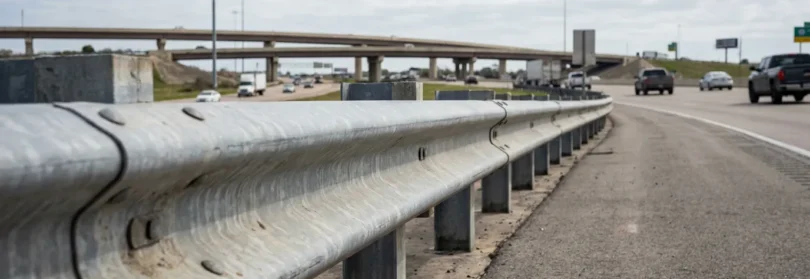
When a Roadside Safety Device Becomes a Deadly Hazard
Key Takeaways: Guardrail accidents on Houston freeways become catastrophic when defective end terminals spear the cabin, barriers flip vehicles, or redirect cars into traffic due to flawed design, improper installation, or neglected maintenance. These failures cause traumatic brain injuries, spinal cord damage, amputations, and wrongful death, with devastating financial losses. Liability extends to manufacturers, installation contractors, trucking employers, and government entities like TxDOT, though sovereign immunity caps state and municipal recovery at $250,000 per person. Texas applies modified comparative fault, barring recovery if your responsibility exceeds 50 percent, with strict deadlines: two years to file suit and 90 to 180 days to notify government entities. Recoverable damages include lost wages, diminished earning capacity, lifelong medical care, and in fatal cases, loss of support and companionship. Multi-party claims require prompt investigation and skilled accident reconstruction for full accountability.
Guardrails are supposed to save lives, yet when they fail, they transform survivable collisions into fatal ones. Guardrail accidents on Houston freeways become catastrophic when barriers spear through passenger compartments, flip vehicles, or redirect them into oncoming traffic. Severe outcomes include traumatic brain injuries, spinal cord damage, amputations, and wrongful death, leaving families with lost wages and lifetime medical expenses.
If you or a loved one suffered life-altering harm in a highway barrier crash, Fibich, Leebron, Copeland & Briggs is prepared to investigate complex, multi-party liability and pursue full accountability. Call 713-751-0025 or use our confidential case review form to discuss your serious car crash in Houston.
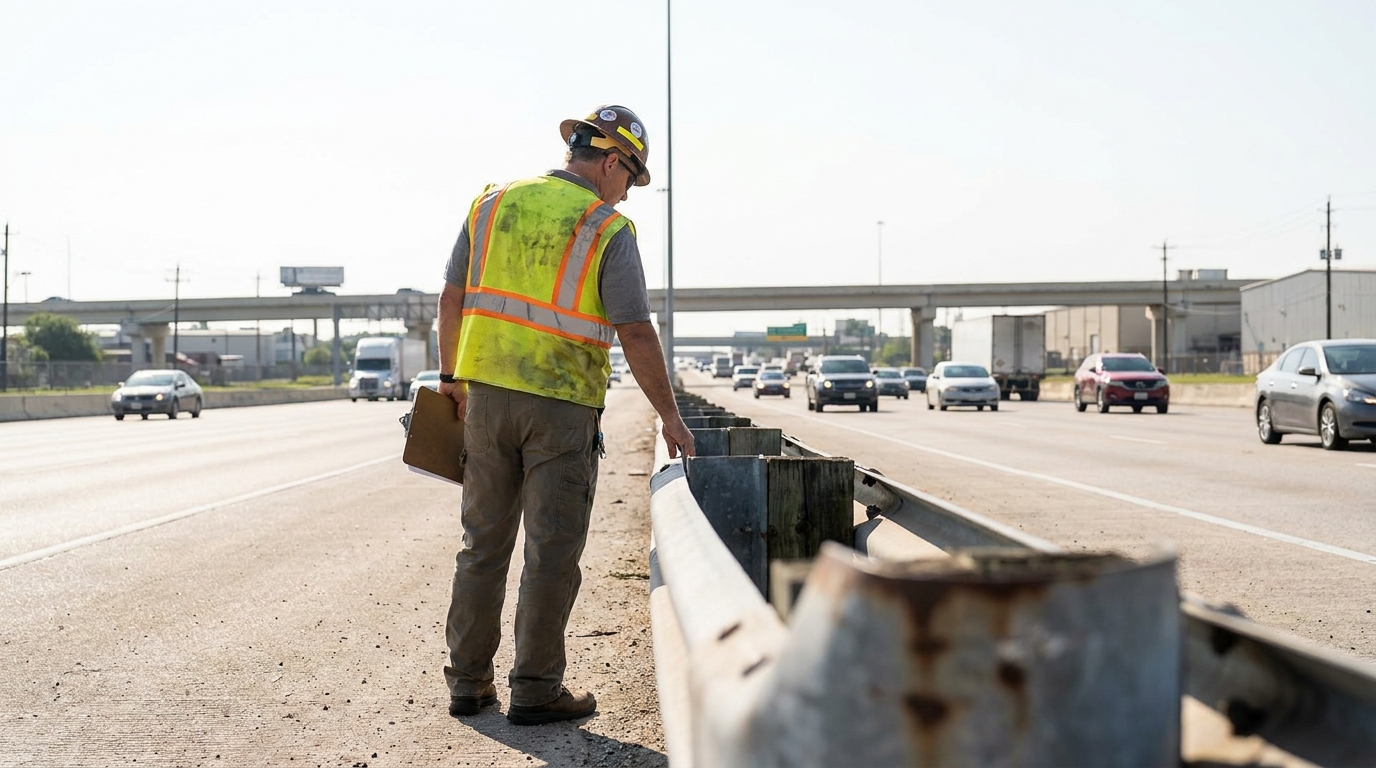
What Turns a Guardrail Accident Into a Catastrophe
Several distinct failures convert routine roadway departures into catastrophic events, most tracing to design, installation, or maintenance decisions made before the crash. When vehicles strike barriers, impact energy should be channeled safely. Defective or degraded hardware produces fatal results. Understanding these mechanisms identifies who bears responsibility.
Defective Guardrail Design and End Terminal Failure
Guardrail end terminal failure is among the most dangerous highway defects. End terminals should flatten and ribbon steel rails away from vehicles on impact. When terminals lock up or malfunction, rails penetrate cabins like spears, causing catastrophic injuries. Allegations surrounding certain ET-Plus units show how product liability guardrail claims target manufacturers when design choices make foreseeable crashes deadlier than necessary. Learn more about defective guardrails are causing severe injuries and death and why these cases demand thorough engineering analysis.
💡 Pro Tip: If possible, photograph damaged guardrails, end terminals, and product stamps or labels before crews remove them. That hardware is physical evidence that disappears quickly after crashes.
Improper Installation and Neglected Maintenance
Well-designed barriers become hazardous when installed at wrong heights, anchored improperly, or left in disrepair after prior impacts. Previously struck guardrails never reset may no longer absorb energy as intended. Rusted posts, missing bolts, and incorrect soil anchoring reduce barriers’ protective ability. Defective guardrails in Houston often reflect combined installation errors and deferred maintenance rather than single causes, leading to multiple defendants.
💡 Pro Tip: Request your attorney send evidence preservation letters early. Spoliation of crash data, work orders, and inspection logs commonly obstructs highway barrier injury cases in Houston.
Who Can Be Held Accountable After a Houston Highway Crash
Catastrophic guardrail cases rarely involve single responsible parties, and that complexity demands strong advocacy. Liability extends to manufacturers, installation contractors, other drivers, trucking companies, and government entities simultaneously. Texas law provides several avenues for apportioning responsibility.
Commercial Drivers, Trucking Companies, and Corporate Negligence
When semi-trucks or delivery vehicles force motorists into barriers, drivers’ employers may share liability. Under Texas Civil Practice and Remedies Code § 72.054, employers can be held responsible under respondeat superior for commercial motor vehicle operator negligence. This 2021 statute is defense-oriented: employers stipulating drivers were employees acting within employment scope can bifurcate trials and limit evidence on direct-negligence theories like negligent entrustment. This matters in high-speed, overloaded, or fatigued-driver crashes triggering pile-ups or pushing cars into defective end terminals. The commercial vehicle employer liability framework gives injured families paths to reach corporate defendants with meaningful insurance, though navigating procedural limits requires experienced counsel.
Texas Transportation Code § 622.134 requires owners of single motor vehicles used exclusively to transport recyclable materials, with a tandem axle weight exceeding 34,000 pounds, to file surety bonds with TxDMV (subject to TxDOT approval and with the principal amount set by TxDOT) before operating on public highways, conditioned on paying for any damage caused by the vehicle’s operation to state highways, county roads, and municipal streets. If such vehicles damaged barriers that later failed to protect motorists, this statute can provide a potential source of financial responsibility, though guardrail coverage depends on specific facts and bond terms.
Government Entities and the Limits of Sovereign Immunity
Suing government entities for defective or poorly maintained guardrails is possible but operates under strict rules. The Texas Tort Claims Act Section 101.021 waives sovereign immunity for injuries caused by real property conditions maintained by governmental units like TxDOT. However, Section 101.023(a) generally limits state government liability to $250,000 per person and $500,000 per occurrence.
Overlapping governmental responsibility frequently complicates claims. Texas Transportation Code § 251.083(c) provides that a county’s duty to maintain a bridge it owns within a municipality does not eliminate the municipality’s independent liability for injuries caused by a defective condition of that bridge; it applies narrowly to county-owned bridges in municipalities and does not reference guardrails, roadside barriers, or TxDOT. While overlapping governmental liability for road infrastructure may exist under Texas tort law more broadly, § 251.083(c) is not the statutory basis for claims involving TxDOT or dangerous barriers on Houston freeways.
| Government Entity | Cap Per Person | Cap Per Occurrence |
|---|---|---|
| State of Texas (e.g., TxDOT) | $250,000 | $500,000 |
| Municipality (City of Houston) | $250,000 | $500,000 |
| Other units (some counties) | $100,000 | $300,000 |
Caps reflect Section 101.023 and apply to bodily injury or death claims.
💡 Pro Tip: Because government caps limit recovery, identifying private defendants like manufacturers and contractors is essential to fully compensate catastrophic injuries. These parties lack sovereign immunity protection.
How Texas Comparative Fault Affects Your Recovery
Texas follows modified comparative fault, meaning your conduct can reduce or eliminate recovery. Under Texas Civil Practice and Remedies Code § 33.001, injured parties recover only if their responsibility share doesn’t exceed 50 percent. If juries assign 20 percent fault, damages reduce proportionally; crossing 51 percent bars recovery entirely. The comparative negligence doctrine explains how courts measure injured parties’ conduct and reduce recovery proportionally.
This proportionate responsibility framework makes multi-party guardrail cases technical. Chapter 33 allows fault apportionment among drivers, guardrail manufacturers, installers, government entities, and other motorists. Defendants often shift blame onto injured persons or empty chairs. Skilled accident reconstruction and engineering analysis keep clients below statutory bars and maximize recoverable shares. Our Houston guardrail accident lawyer team examines every contributing factor.
Critical Deadlines That Can Make or Break Your Texas Guardrail Crash Claim
Missing filing deadlines can end strong cases before they begin, demanding immediate attention. Two separate timelines apply:
- Civil statute of limitations: Under Texas Civil Practice and Remedies Code § 16.003, personal injury claims must be filed within two years of injury date.
- Government notice deadline: Under Section 101.101, claimants must generally notify governmental units within 180 days. However, shorter notice periods exist, the City of Houston requires written notice within 90 days.
These deadlines are distinct, and courts interpret exceptions narrowly. While discovery rule may apply in limited circumstances, it’s not automatic. Government notice requirements are administrative prerequisites running separately from two-year civil limitations, and failing to satisfy them bars claims against TxDOT or cities regardless of injury severity.
💡 Pro Tip: Treat government notice windows as most urgent deadlines. They’re far shorter than two-year limitations periods and can be as short as 90 days for some cities.
Damages Available in a Catastrophic Guardrail Case
Catastrophic guardrail injuries carry costs extending beyond emergency rooms. Brain trauma, paralysis, or limb loss survivors often face permanent disability and lifetime care. Recoverable damages include lost wages, diminished earning capacity, and future medical care: surgeries, rehabilitation, and in-home assistance. In guardrail wrongful death cases in Houston, families pursue compensation for financial support and companionship loss.
Proving damages requires substantial documentation and credible expert analysis. Life-care planners, vocational analysts, and treating physicians quantify long-term financial strain families shoulder. Because defendants and insurers push for quick, low settlements, trial-ready approaches focused on full lifetime claim value ensure meaningful accountability rather than discounted payouts.
Frequently Asked Questions
-
How long do I have to file a guardrail accident claim in Texas?
Most personal injury claims must be filed within two years under Texas Civil Practice and Remedies Code § 16.003. For government entities, provide notice within 180 days under Section 101.101, or sooner if city charters require it, Houston requires 90 days. These timelines are separate, with narrowly applied exceptions.
-
Can I sue TxDOT for a defective guardrail?
Possibly, under the Texas Tort Claims Act. Section 101.021 waives immunity for real property condition injuries, but Section 101.023 caps state liability at $250,000 per person and $500,000 per occurrence. Success depends on specific facts.
-
What if I was partially at fault for the crash?
You may still recover under Texas Civil Practice and Remedies Code § 33.001. Texas uses modified comparative fault, allowing recovery if your responsibility share doesn’t exceed 50 percent, though awards reduce by your fault percentage.
-
Who can be held liable besides the driver?
Liability may extend to manufacturers, installers, trucking employers, and government entities. Employers may be liable under respondeat superior for commercial driver negligence per Texas Civil Practice and Remedies Code § 72.054, with multiple parties sharing fault under Chapter 33.
-
What evidence matters most in these cases?
Physical hardware, maintenance records, and crash data are critical. End terminal photographs, work orders, and accident reconstruction often determine whether defects, installation errors, or maintenance failures caused harm.
Protecting Your Family’s Future After a Devastating Barrier Crash
Catastrophic guardrail crashes sit at the intersection of product defects, negligent maintenance, corporate trucking liability, and government responsibility, making them among Texas roads’ most complex injury cases. From end terminal failures to overlapping liability among manufacturers, contractors, and public entities, these claims demand rigorous investigation, strict attention to two-year limitations and government notice rules, and clear strategies for proving causation and damages.
If your family faces permanent disability, mounting medical bills, or loved one loss after highway barrier crashes, Fibich, Leebron, Copeland & Briggs attorneys are ready to fight for full accountability. Call 713-751-0025 or request your free consultation online to learn how we can help.