
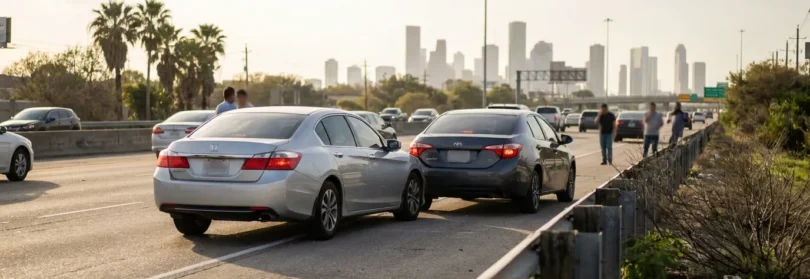
When a Sudden Stop on a Houston Freeway Turns Catastrophic
Key Takeaways: Liability for a brake checking accident in Houston is rarely assigned to one driver alone; Texas law divides fault by percentage under Chapter 33 of the Civil Practice and Remedies Code. A lead driver who brakes deliberately without cause may be found negligent or reckless, while the trailing driver may share blame for following too closely. Under § 33.001, a claimant whose percentage of responsibility exceeds 50% generally recovers nothing, and any permitted award is reduced by the claimant’s percentage under § 33.012. Because intent is rarely admitted, dashcam video, event data recorder downloads, witness statements, and reconstruction analysis often determine the outcome. Most injury suits must be filed within two years under § 16.003(a), with wrongful death claims measured from the date of death.
Liability for a brake checking accident in Houston depends on which driver’s conduct a jury finds unreasonable, and fault may be divided between both drivers. A driver who intentionally slams the brakes to punish a tailgater may be found to have committed an aggressive act that Texas juries could treat as negligence or recklessness. The driver behind, however, generally owed a duty to follow at a reasonable and prudent distance. On I-45, the 610 Loop, and the Katy Freeway, that split-second decision at highway speed can produce spinal injuries, traumatic brain injuries, and permanent disability.
If you or a loved one suffered serious injuries in a brake check collision, the trial attorneys at Fibich, Leebron, Copeland & Briggs are prepared to investigate fault, confront the insurance carrier, and pursue full accountability. Call 713-751-0025 or contact us now to discuss your claim.
What Brake Checking Actually Is Under Texas Law
Brake checking describes a driver’s deliberate, unnecessary braking intended to force the vehicle behind to back off or provoke a collision. Texas does not have a statute using the phrase "brake checking," so these claims are litigated under ordinary negligence principles, with traffic statutes such as the reckless driving provision (Tex. Transp. Code § 545.401) and following-distance rule (§ 545.062) offered as evidence of unreasonable conduct. Courts consider whether the lead driver’s stop served any legitimate purpose, such as avoiding debris or a pedestrian.
Intent matters, but is rarely admitted. Most brake checkers tell officers they stopped for traffic. Proving otherwise generally requires dashcam footage, event data recorder downloads, witness statements, and roadway evidence such as skid marks. Reconstruction analysis of deceleration rates may reveal braking inconsistent with any hazard ahead. Intentional conduct can raise coverage questions, because many auto policies exclude intentionally caused harm.
Understanding Brake Checking Accident Liability Texas Drivers Face
Texas allocates fault by percentage rather than picking a single villain. Fault in brake checking cases is governed by the Proportionate Responsibility statute in Chapter 33 of the Texas Civil Practice and Remedies Code. The trier of fact assigns each responsible party a percentage of responsibility, and the court reduces damages accordingly.
The threshold question is the 51% bar. Under Tex. Civ. Prac. & Rem. Code § 33.001, a claimant "may not recover damages if his percentage of responsibility is greater than 50 percent." A rear-ending driver found 51% at fault may recover nothing, while a driver found 50% at fault may still recover half of proven damages. Section 33.012 requires the court to reduce any permitted award by the claimant’s own share.
This is settled law, not a moving target. Harris County juries and adjusters apply a well-developed framework, and a single percentage point can decide whether an injured client recovers anything.
| Fault Assigned to the Injured Driver | Effect on Recovery Under § 33.001 |
|---|---|
| 0% | Full proven damages, subject to proof |
| 25% | Damages reduced by 25% |
| 50% | Damages reduced by half; recovery still permitted |
| 51% or more | Recovery barred entirely |
Why the Rear Driver Is Not Automatically at Fault
Insurance adjusters frequently treat every rear-end impact as the trailing driver’s fault, but Texas law does not create an automatic rule. Texas courts have held that a rear-end collision is some evidence of negligence but does not establish it as a matter of law. Texas Transportation Code § 522.003 lists following the vehicle ahead too closely among "serious traffic violations," alongside reckless driving and improper lane changes.
That same list cuts both ways. Reckless driving appears in the identical provision, so a lead driver who brake checks may have engaged in conduct the Legislature treats as serious. Aggressive driving liability in Texas can potentially shift substantial responsibility onto the driver who braked without cause, though allocation always depends on the facts a jury accepts.
Evidence That Commonly Shifts Fault Percentages
- Dashcam or nearby business surveillance video showing braking without a hazard
- Event data recorder data reflecting throttle, braking, and speed before impact
- Independent witness statements describing prior tailgating, gestures, or road rage behavior
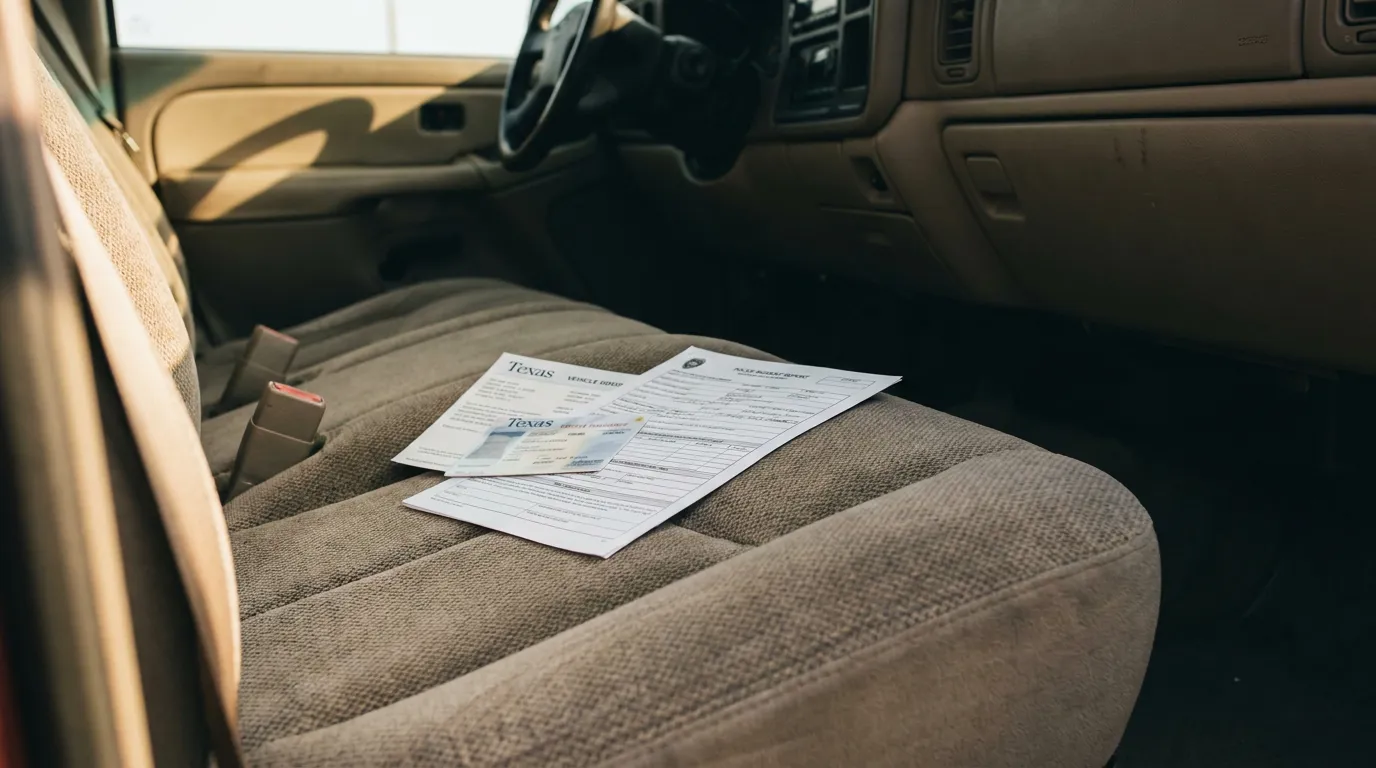
- The Texas Peace Officer’s Crash Report, including narrative, diagram, and contributing-factor codes
- Cell phone records or telematics from commercial vehicles
When Commercial and Multi-Party Liability Enters the Picture
Brake checking cases become substantially more complex when a commercial vehicle is involved. If a tractor-trailer, delivery van, or fleet vehicle is in the chain, the employer may face vicarious liability for a driver acting in the course and scope of employment, along with direct claims for negligent hiring, training, retention, or supervision.
Chain-reaction pileups add another layer. A brake check on a congested Houston freeway can trigger a multi-vehicle collision in which each responsible party may be assigned a percentage. Defendants may designate a responsible third party under § 33.004, attempting to move blame onto someone not party to the lawsuit. Similar fault-allocation questions arise in other collision types, as discussed in our analysis of motorcycle rear-end fault.
Injuries That Justify a Serious Claim
High-speed brake check collisions frequently produce life-altering harm. Cervical and lumbar disc injuries requiring fusion, traumatic brain injuries, complex fractures, and internal organ damage are common. When airbags deploy at freeway speed, occupants may face months of treatment and permanent restrictions.
Damages are generally anchored in real economic loss. Future medical care, including surgical revision, pain management, and attendant care, often represents the largest component and must be supported by competent expert testimony. Lost wages and diminished earning capacity may follow closely behind, particularly for clients in physically demanding Houston industries.
The Deadline That Can End a Strong Case Before It Starts
A Houston brake checking crash victim generally has two years to file suit. Under Tex. Civ. Prac. & Rem. Code § 16.003(a), a person generally must bring suit for personal injury not later than two years after the day the cause of action accrues, and missing that deadline typically bars recovery entirely.
Exceptions exist, but courts interpret them narrowly. Separate statutes may toll the period, for example, for claimants who were minors or under legal disability when the cause of action accrued.
Fatal cases follow a different accrual date. Under § 16.003(b), suit generally must be filed not later than two years after the cause of action accrues in an action for injury resulting in death, and that cause of action generally accrues on the death of the injured person. Claims involving governmental units may carry separate and much shorter administrative notice requirements.
💡 Pro Tip: Preserve your vehicle before repairs. The event data recorder inside a modern car can be overwritten or lost once the vehicle is sold to salvage, and that data is often among the strongest available proof of who braked, when, and how hard.
How Insurance Carriers Attack Brake Check Claims
Carriers often understand the 51% bar better than most claimants and use it aggressively. A common tactic is to argue that the injured driver was following too closely, pushing that percentage past the statutory threshold so the claim collapses. Recorded statements taken days after a crash frequently become the source of needed admissions.
A trial-ready approach can change the calculation. Preservation letters, prompt scene documentation, medical causation opinions, and reconstruction analysis may reduce the room an insurer has to inflate a claimant’s percentage. Working with a houston car accident lawyer early can give the case structure before witness memories fade and video is overwritten.
💡 Pro Tip: Decline to give a recorded statement to the other driver’s insurer until you have spoken with counsel. Questions about following distance are often designed to build a comparative fault defense.
Frequently Asked Questions
1. Is brake checking illegal in Texas?
Texas does not criminalize "brake checking" by that name, but the conduct may violate general traffic laws such as reckless driving under Tex. Transp. Code § 545.401 and may support civil claims of negligence or recklessness.
2. Can I recover damages if I rear-ended someone who brake checked me?
Possibly. Under Tex. Civ. Prac. & Rem. Code § 33.001, you may generally recover only if your percentage of responsibility is 50% or less, and any award will be reduced by your share under § 33.012.
3. How is fault divided in a brake check crash?
The trier of fact assigns each responsible party a percentage of responsibility under Chapter 33. Factors include following distance, speed, whether a hazard justified the stop, and any evidence of aggressive driving by either party.
4. What if a commercial truck was involved?
An employer may face vicarious liability for a driver acting in the course and scope of employment, and separate claims for negligent hiring or supervision may apply. These cases often involve corporate defendants, multiple insurers, and electronic data requiring quick preservation.
5. How long do I have to file a brake checking injury claim?
Generally two years under § 16.003(a), measured from the crash date. In wrongful death cases, § 16.003(b) generally measures the period from the date of death, and limited statutory exceptions and tolling rules may apply.
Protecting Your Recovery After an Aggressive Driving Crash
Brake checking accident liability in Texas generally turns on percentages, and those percentages turn on evidence. Because § 33.001 may bar recovery entirely once a claimant’s responsibility exceeds 50%, the difference between a full-value result and no recovery can come down to video, data, and testimony gathered in the first weeks after the wreck.
If a brake check crash left you facing surgery, permanent restrictions, or the loss of a family member, the trial lawyers at Fibich, Leebron, Copeland & Briggs are ready to build the record that fault allocation demands. Call 713-751-0025 or reach our Houston legal team to request a case review.
Disclaimer: This content is for informational purposes only and is not legal advice. Every case is unique, and results may vary. Consult an attorney about your specific circumstances.