
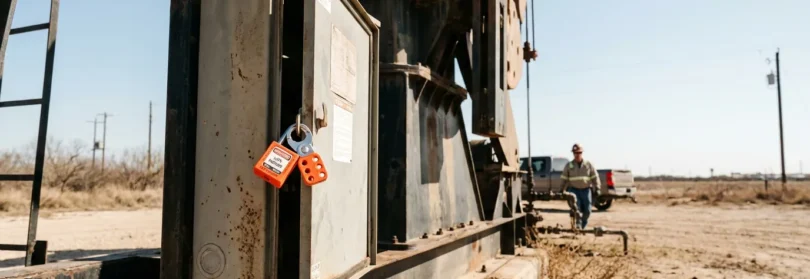
When Hazardous Energy Is Not Controlled: The Reality Behind Oilfield Startup Injuries
Key Takeaways: A lockout/tagout violation occurs when an employer fails to de-energize, isolate, lock, and tag equipment before servicing it, allowing stored or live energy to release without warning and cause crush injuries, amputations, electrocution, or death. Federal standard 29 C.F.R. § 1910.147 requires written energy control procedures, employee-specific locks, training, and verification of zero energy state, though it exempts oil and gas well drilling and servicing. Common violations include missing procedures, shared locks, unrelieved stored energy, and premature power restoration. An OSHA citation may be persuasive evidence but creates no private cause of action and does not establish civil liability under Texas law. Because workers’ compensation is voluntary in Texas, many injured workers may sue nonsubscribing employers directly, and common-law defenses are unavailable to nonsubscribers under Tex. Lab. Code § 406.033. Most suits must be filed within two years under Tex. Civ. Prac. & Rem. Code § 16.003.
A lockout/tagout violation happens when an employer, operator, or contractor fails to de-energize, isolate, lock, and tag equipment before servicing or maintenance, allowing stored or live energy to release without warning. In Houston oilfield cases, that failure may mean a pump jack cycles while a hand is inside the mechanism, a compressor energizes during maintenance, or a valve releases pressure into a crew that believed the line was dead. The resulting injuries can be catastrophic: crush trauma, amputations, degloving injuries, electrocution, and fatal energization events that leave families facing permanent disability and lost income.
If you or a family member suffered a devastating injury because hazardous energy was never properly isolated, the team at Fibich, Leebron, Copeland & Briggs is prepared to investigate. Call 713-751-0025 or reach out to our Houston team to discuss what happened.
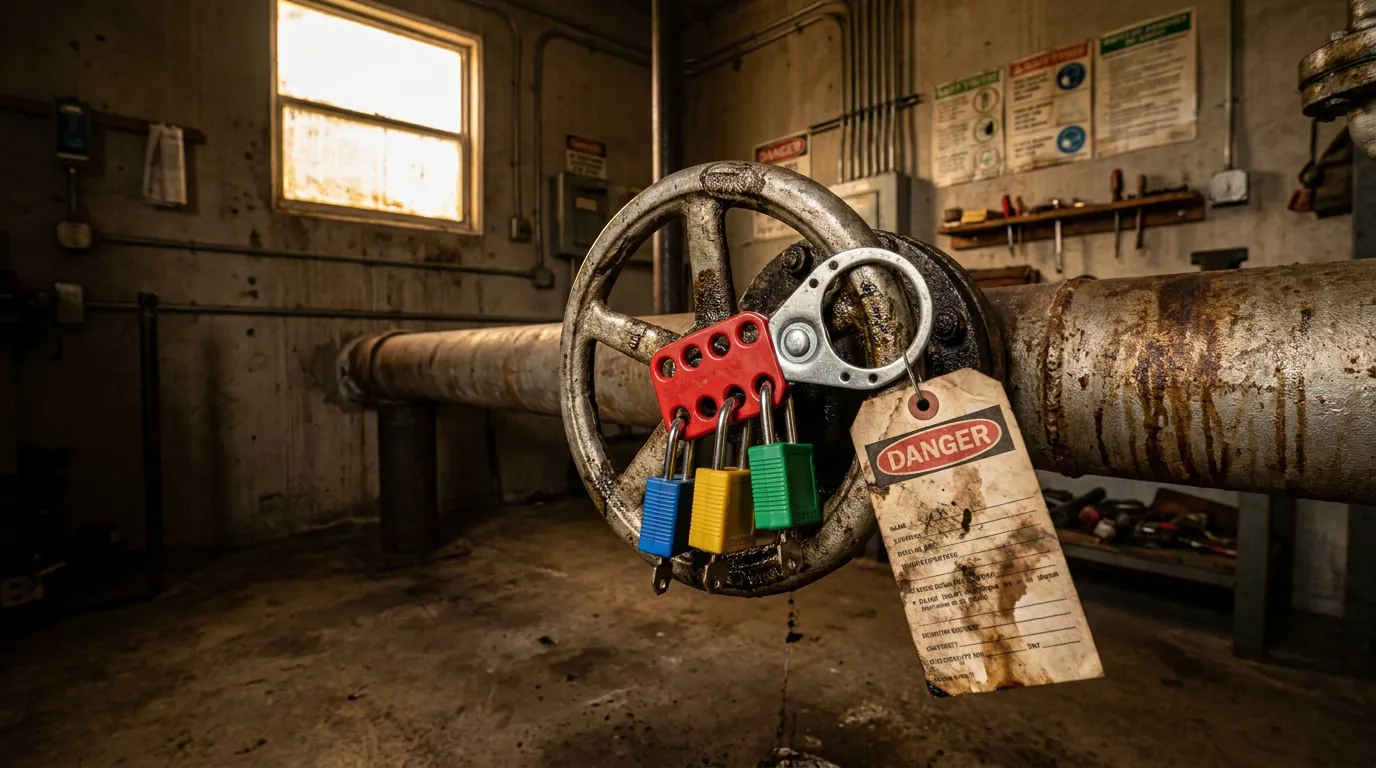
What OSHA 1910.147 Requires Before Anyone Touches Live Equipment
The federal control of hazardous energy standard, 29 C.F.R. § 1910.147, requires covered employers to establish written energy control procedures, train affected employees, and physically lock or tag energy-isolating devices before servicing or maintenance begins. The standard requires periodic inspections and employee-specific locks so no one else can restore power while a worker remains exposed. Critically, the standard does not cover oil and gas well drilling and servicing, and it does not apply to normal production operations unless a worker must bypass a guard or place a body part in a danger zone.
Violations generally fall into recognizable patterns. Common breakdowns include:
- No written energy control procedure for the specific machine
- Tags used where physical locks were required, or shared locks and master keys
- Failure to relieve stored energy such as hydraulic pressure, residual steam, or tension
- Supervisor restoring power without verifying all crews had cleared
- Missing or defeated guarding
- No verification test confirming zero energy state before work began
A federal workplace safety citation may be meaningful evidence but is not automatically dispositive in civil cases. The OSH Act creates no private right of action, and Texas courts have generally declined to treat OSHA regulations as establishing negligence per se. OSHA findings may be offered as evidence of the applicable standard of care; they do not by themselves establish civil liability under Texas law.
Why Texas Law Lets Many Injured Oilfield Workers Sue Directly
Texas occupies an unusual position because private-sector workers’ compensation participation is generally voluntary here. The voluntary nature results in large numbers of employers choosing not to subscribe, making tort actions against nonsubscribing employers an important area of tort law in this state.
That distinction drives much of how a case is built. Where an employer is a nonsubscriber, Tex. Lab. Code § 406.033 bars the common-law defenses of contributory negligence, assumption of the risk, and the fellow-servant rule, meaning a worker’s own carelessness generally does not reduce or bar recovery. The worker must still prove that the employer’s negligence caused the injury. Where the employer subscribes, the Act’s exclusive remedy provision generally limits tort recovery to narrow exceptions, principally an exemplary damages claim for gross negligence in a workplace fatality or intentional injury. Commentary on Texas employer tort liability observes that proving gross negligence is very difficult and proving intent even harder.
For subcontracted crews hurt by another company’s equipment, this distinction may open a third-party claim separate from the compensation system. One important limitation: under Tex. Lab. Code §§ 406.123 and related provisions, a general contractor or premises operator that provides workers’ compensation coverage through a written agreement may be treated as a statutory employer and share exclusive remedy protection.
Sorting Out Who Is Actually Responsible
Large Houston-area sites rarely have a single responsible party. The operator may own the equipment, a drilling contractor may control the work area, a service company may employ the injured worker, and a maintenance vendor may have written the deficient procedure.
| Potential Defendant | Typical Theory |
|---|---|
| Nonsubscribing employer | Direct negligence; common-law defenses unavailable |
| Site operator or lease owner | Negligent exercise of retained control over safety |
| Third-party contractor crew | Ordinary negligence causing equipment startup injury |
| Equipment manufacturer | Design defect or inadequate isolation warnings |
💡 Pro Tip: Send a written evidence-preservation demand quickly. Lockout logs, permit-to-work forms, control system data, and lock assignment records can be overwritten or discarded under routine retention policies.
Proving Lockout Tagout Violations Oilfield Injuries Cases Require
Most claims arising from energy isolation failure are pleaded as negligence, requiring proof of duty, breach, causation, and damages. Under this negligence claim framework, a contractor or operator that fails to de-energize and lock equipment before servicing may be shown to have breached the duty of reasonable care, provided a duty is first established. For premises owners and general contractors, this generally turns on the degree of control actually retained over the injury-producing work.
Texas statutory duties may reinforce the breach element. Employers must provide training for employees who use or handle hazardous chemicals under Tex. Health & Safety Code § 502.009, covering safe handling and proper use of protective equipment. Training is required before a new or newly assigned employee works in an area containing a hazardous chemical, and records must be maintained for at least five years. Where this chapter applies, those records may provide a documentary trail to test whether required instruction actually occurred.
Texas signals that liability protections stop short of the worst conduct. In the narrow context of a declared oil or gas emergency, Tex. Natural Resources Code § 91.953(a) provides immunity except for gross negligence, recklessness, or intentional misconduct. This rarely applies to routine maintenance incidents, but the carve-out reflects a broader principle worth understanding when a lockout failure may reflect conscious indifference. For background on how these failures occur, see our discussion of common oil field accident causes.
The Filing Deadline That Ends Strong Cases Prematurely
A Houston oilfield worker injured by a lockout/tagout failure generally has two years from the date the cause of action accrues to file suit, under Tex. Civ. Prac. & Rem. Code § 16.003(a). Missing that deadline may bar the claim entirely, regardless of how egregious the safety failure was.
The two-year rule is not absolute, but exceptions are narrow. Separate provisions may toll limitations for minors, persons of unsound mind, or a defendant’s absence from the state. Courts generally interpret tolling, fraudulent concealment, and discovery-rule arguments narrowly. Administrative processes, including federal safety inspections and workers’ compensation proceedings, generally run separately and typically do not extend the civil deadline unless law expressly provides otherwise.
When a Lockout Failure Turns Fatal
Wrongful death claims carry the same two-year period, but the clock generally runs from a different point. Under Tex. Civ. Prac. & Rem. Code § 16.003(b), the cause of action accrues on the death of the injured person. A survival claim belonging to the decedent’s estate is governed by different accrual principles tied to the injury itself. Where a worker survives an energization or crushing incident before dying, the distinction between injury date and death date can be outcome-determinative.
What Serious Damages Look Like in These Cases
Catastrophic energy-release injuries generate losses that extend across a lifetime. Recoverable damages may include lost earning capacity, particularly for workers whose hands or mobility were permanently compromised, and future medical care including surgical revisions, prosthetics, attendant care, and pain management. Families may face household restructuring and severe financial strain. Exemplary damages require clear and convincing proof of gross negligence or malice and are subject to statutory caps.
Frequently Asked Questions
1. Does an OSHA citation automatically win my case?
No. A workplace safety citation may serve as persuasive evidence of a breached safety obligation, but the OSH Act creates no private right of action. Courts evaluate negligence under state law standards.
2. My employer says I failed to apply my own lock. Am I out of luck?
Not necessarily. Against a nonsubscribing employer, Texas law bars the contributory negligence defense. You must still prove the employer was negligent.
3. Can I sue if I was a subcontractor injured by another company’s equipment?
Often, yes. When the injury involves a party other than your employer, the claim may proceed as a third-party tort action, unless that company qualifies as a statutory employer by providing your workers’ compensation coverage under written agreement.
4. What evidence matters most after an equipment startup injury?
Lockout logs, permit-to-work documentation, training records, the equipment itself, control system data, and witness identities. Preservation should begin immediately.
5. How long do I actually have to file?
Generally two years from accrual, subject to limited statutory exceptions that courts construe narrowly.
Holding Corporate Defendants Accountable for Preventable Energy Releases
A lockout/tagout failure often reflects decisions about scheduling pressure, training budgets, procedure writing, and supervision, decisions that may belong to companies with substantial resources and sophisticated defense teams. Establishing lockout tagout violations oilfield injuries claims generally requires early evidence preservation, technical reconstruction, and clear understanding of whether the employer subscribed to workers’ compensation.
Our firm handles serious, high-stakes cases involving permanent disability and death on Texas energy sites, and our lockout tagout violations oilfield injuries lawyer team is built for litigation, not quick settlements. Contact Fibich, Leebron, Copeland & Briggs at 713-751-0025 or request a case review today while the evidence is still recoverable.
Disclaimer: This content is for informational purposes only and is not legal advice. Every case is unique, and results may vary. Consult an attorney about your specific circumstances.