
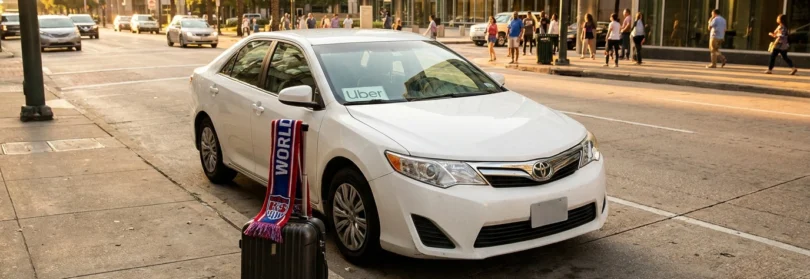
Houston Roads, World Cup Crowds, and the Rideshare Risks Every Fan Should Understand
Key Takeaways: Houston will host FIFA World Cup 2026 matches, bringing hundreds of thousands of visitors who will rely on rideshare services. Texas rideshare liability operates through a layered insurance framework varying by trip “period.” Uber and Lyft provide $1 million in third-party liability coverage once a ride is accepted, but coverage is limited when drivers await requests. TNC drivers are independent contractors under Texas Occupations Code § 2402.114, affecting liability claims. Injured visitors have two years to file personal injury claims under Texas Civil Practice and Remedies Code § 16.003(a).

When the World Comes to Houston, the Roads Get More Dangerous
Houston is preparing for FIFA World Cup 2026, where visiting fans will rely heavily on rideshare services. This surge in demand brings increased accident risk. Congested highways, unfamiliar drivers, distracted navigation, and high-volume traffic create conditions where Uber and Lyft crashes become statistically inevitable. If you’re injured in a rideshare accident in Houston, understanding your rights under Texas law protects your ability to recover full compensation.
If you’ve been hurt in a rideshare collision while visiting Houston, Fibich, Leebron, Copeland & Briggs is ready to help. Call us at 832-925-3015 or contact us online.
How Texas Rideshare Insurance Coverage Actually Works
Insurance coverage depends entirely on which “period” of the ride the driver was in at impact. Texas law and rideshare policies divide trips into distinct phases, each with different protection levels.
The Three Coverage Periods Explained
Under Texas Insurance Code Chapter 1954, TNCs must maintain primary automobile insurance while drivers are logged in and during prearranged rides:
|
Coverage Period |
Driver Status |
Coverage Available |
|---|---|---|
|
Period 1 |
Logged in, waiting for a request |
At least $50,000/person, $100,000/accident (bodily injury); $25,000 (property damage), contingent liability coverage |
|
Period 2 |
Ride accepted, en route to passenger |
At least $1 million third-party liability |
|
Period 3 |
Passenger in vehicle, trip in progress |
At least $1 million third-party liability |
During Periods 2 and 3, Uber and Lyft provide at least $1 million in third-party liability coverage, protecting passengers, pedestrians, and other vehicle occupants. During Period 1, coverage drops to contingent liability minimums that may inadequately cover catastrophic injuries.
💡 Pro Tip: Request your Uber or Lyft trip receipt immediately after an accident. This establishes which coverage period was active, directly determining applicable insurance limits.
Standard Auto Insurance May Not Fill the Gap
A serious coverage trap exists for those injured when drivers are logged in but not on active trips. Standard personal auto policies may deny coverage while drivers operate as TNC drivers, creating gaps that leave victims undercompensated. Victims should explore all recovery avenues, including rideshare companies’ contingent coverage.
Why Independent Contractor Status Complicates Your Claim
Under Texas Occupations Code § 2402.114, TNC drivers are independent contractors, not employees. This classification has significant legal consequences. The doctrine of respondeat superior, holding employers liable for employee negligence, generally doesn’t apply to Uber or Lyft. Pursuing companies directly requires different legal theories: negligent hiring, negligent retention, or statutory insurance violations.
For visiting World Cup fans unfamiliar with U.S. civil litigation, these institutional barriers can be difficult to navigate without experienced legal guidance.
💡 Pro Tip: Even if Uber or Lyft claims independent contractor status, the company’s statutory insurance obligations under Texas Insurance Code Chapter 1954 remain. Contractor classification limits vicarious liability but doesn’t eliminate insurance coverage duties.
UM/UIM Coverage: A Protection You Should Know About
Uninsured and underinsured motorist coverage is frequently overlooked but can be one of the most valuable protections available. Under Texas Insurance Code § 1954.053, Uber and Lyft must maintain $1 million in liability coverage along with uninsured and underinsured motorist coverage where required by Section 1952.101 during prearranged rides (Periods 2 and 3). A comparable UM/UIM requirement also applies during Period 1 under Section 1954.052, though at lower liability limits of $50,000 per person and $100,000 per accident.
For a detailed breakdown of navigating Texas car insurance claims after an accident, our firm provides a practical guide.
💡 Pro Tip: Don’t accept settlement offers before fully understanding your injury extent. Early offers are designed to limit company exposure. Accepting prematurely can waive your right to pursue additional compensation, including future medical care and lost wages.
Passenger Safety Standards and What TNCs Are Required to Maintain
Texas law imposes specific safety obligations on rideshare companies beyond insurance coverage. TNCs must maintain an Intoxicating Substance Policy prohibiting driver impairment during all active periods. Additionally, TNCs must keep individual ride records for five years and driver records for at least five years after authorization ends. These records serve as critical evidence, establishing trip timelines, driver history, and company awareness of safety concerns.
-
TNCs must maintain policies prohibiting driver impairment during all active periods
-
Individual ride records must be preserved for five years
-
Driver records must be kept for five years after authorization ends
-
These records are critical evidence in serious injury cases
The Deadline Visiting Fans Cannot Afford to Miss
If you’re injured in an Uber accident while visiting Houston, understand Texas’s statute of limitations for personal injury claims. Under Texas Civil Practice and Remedies Code § 16.003(a), you must file a lawsuit within two years of the injury date. The same period applies to property damage claims. This deadline is strictly enforced.
What This Means for International Visitors
For fans returning home after the World Cup, the two-year clock doesn’t pause because you’ve left the country. If injured in Houston, Texas law governs your claim, and the statute of limitations continues regardless of location. Waiting to “see how injuries develop” is a costly mistake.
Why Acting Quickly Protects Your Claim
Evidence disappears faster than victims realize. Dashcam footage may be overwritten. Witnesses disperse, especially during international events. Uber and Lyft records must be formally requested through legal process. Earlier attorney involvement means stronger claims.
💡 Pro Tip: If traveling internationally after injury in a Houston rideshare accident, consult a Houston car accident attorney before leaving. Early preservation letters prevent destruction of trip data and driver records.
What to Do Immediately After an Uber Accident in Houston
Actions taken after a rideshare crash significantly affect claim strength. Seeking immediate medical attention is critical for health and creates documented records linking injuries to accidents.
-
Call 911 and request a police report for independent official documentation
-
Photograph the scene, vehicle damage, injuries, and landmarks
-
Screenshot the app to document trip status, driver information, and details
-
Collect witness contact information, especially from attendees returning home
-
Don’t give recorded statements to adjusters before consulting a car accident attorney in Houston
Frequently Asked Questions
1. Does Uber’s $1 million insurance cover me as a passenger?
Generally, yes. When passengers are in vehicles during trips (Period 3), Uber and Lyft provide at least $1 million in third-party liability coverage. Actual recovery depends on crash facts, driver status, and whether other parties share liability.
2. Can I sue Uber or Lyft directly if their driver caused my accident?
Because TNC drivers are independent contractors under Texas Occupations Code § 2402.114, pursuing companies under traditional respondeat superior theory is difficult. However, claims based on negligent hiring, retention, or statutory insurance violations may be available.
3. What if the Uber driver who hit me had insufficient insurance?
Under Texas Insurance Code § 1954.053, Uber and Lyft must maintain $1 million in liability coverage and uninsured/underinsured motorist coverage where required by Section 1952.101 during prearranged rides; a UM/UIM requirement also applies during Period 1 under Section 1954.052 at lower limits. Your own auto policy may provide additional UM/UIM protection. Consulting an attorney familiar with these claims is strongly recommended.
4. I live outside the U.S. How do I file a claim in Texas?
International visitors have the same right to pursue claims as U.S. residents. The two-year statute applies equally. A Texas-licensed attorney can manage the process, handle insurer communications, and file suit while you’re abroad.
5. What damages can I recover after a serious rideshare accident?
Recoverable damages may include emergency and ongoing medical expenses, future care costs, lost wages, loss of earning capacity, pain and suffering, and loss of consortium. For catastrophic injuries, claim values can be substantial.
The Bottom Line for World Cup Visitors Injured in Houston
A serious rideshare accident can turn your trip into a life-altering event with lasting consequences. Texas’s rideshare liability framework involves layered insurance coverage, independent contractor classifications, statutory mandates, and strict deadlines. Visiting fans deserve full and fair compensation, which begins with understanding your rights.
If you were injured in an Uber or Lyft accident in Houston, Fibich, Leebron, Copeland & Briggs is here to fight for the accountability and compensation you deserve. Don’t let insurance adjusters or corporate legal teams determine your claim’s value. Call us at 832-925-3015 or reach out online to protect your rights.