
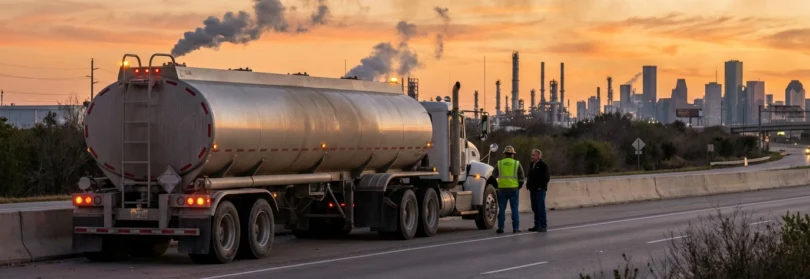
Oilfield workers in Houston face dangerous conditions, and truck crashes on job sites remain a leading cause of catastrophic injuries and fatalities. If you or a loved one suffered serious injuries in a Houston oilfield truck crash, Texas law may entitle you to significant compensation for medical expenses, lost wages, future care needs, and pain and suffering. Understanding your rights is essential for holding negligent parties accountable, whether those parties include a truck driver, trucking company, cargo loader, or vehicle manufacturer.
If you are dealing with life-altering injuries from an oilfield truck crash, Fibich, Leebron, Copeland & Briggs is prepared to fight for the full compensation you deserve. Call 832-925-3015 or reach out to our team today for a confidential case evaluation.
Who Can Be Held Liable in a Houston Oilfield Truck Crash?
One of the most critical aspects of any oilfield truck accident claim is identifying every potentially liable party. Severe injuries from commercial truck collisions frequently generate medical bills and lost income that exceed a single insurance policy’s limits. Under Texas Civil Practice & Remedies Code Chapter 33, Texas follows a proportionate responsibility system where each defendant is generally liable only for its own percentage of fault. However, a defendant found more than 50% responsible may be held jointly and severally liable.
Under respondeat superior, a trucking company can be held responsible for a driver’s negligent acts when the driver was acting within the course and scope of employment. Trucking companies may also face independent claims for negligent hiring, failure to supervise, inadequate training, or pressuring drivers to violate federal hours-of-service regulations. In oilfield operations, where tight deadlines and heavy equipment create constant pressure, these failures are common.
Potentially Liable Parties in an Oilfield Truck Crash
| Liable Party | Basis of Liability |
|---|---|
| Truck Driver | Negligence, fatigue, intoxication, distracted driving |
| Trucking Company (Carrier) | Respondeat superior, negligent hiring/supervision, safety violations |
| Truck Owner (if different from carrier) | Negligent entrustment, failure to maintain |
| Cargo Loader/Shipper | Improper loading, overweight cargo, unsecured loads |
| Truck or Parts Manufacturer | Defective design, manufacturing defect, failure to warn |
| Maintenance/Repair Company | Faulty repairs, failure to identify mechanical defects |
| Government Entity (rare cases) | Dangerous road design, failure to maintain roadway |
Identifying all of these parties early in the process is essential. An experienced oilfield accident attorney Houston team will investigate black-box data, maintenance logs, driver qualification files, and cargo records to uncover every entity that contributed to the crash.
💡 Pro Tip: Evidence in truck crash cases can disappear quickly. Trucking companies may overwrite electronic logging device data or repair damaged vehicles within days. Contacting an attorney immediately helps preserve critical evidence through spoliation letters and rapid investigation.

How Texas Negligence Law Protects Injured Oilfield Workers
To recover compensation in a Texas oilfield truck crash case, you must prove four elements of negligence: duty of care, breach of that duty, causation linking the breach to the crash, and actual damages.
For oilfield workers, proving breach and causation often involves uncovering federal regulatory violations and corporate safety failures. A trucking company that forced a driver to exceed hours-of-service limits, or a maintenance provider that signed off on a faulty brake inspection, has likely breached its duty of care. Establishing causation requires connecting that specific failure to the collision through evidence such as accident reconstruction, electronic data, and witness testimony.
💡 Pro Tip: Texas follows a modified comparative fault rule under Chapter 33 of the Texas Civil Practice and Remedies Code. If you are found 51% or more at fault, you are barred from recovering any damages. If your fault is 50% or less, your recovery is reduced by your percentage of responsibility. Insurance companies routinely try to shift blame onto injured workers, making strong legal representation critical.
What Damages Can You Recover After an Oilfield Truck Crash?
Texas tort law allows personal injury claimants to seek compensation for both economic and non-economic damages. For oilfield workers who sustain catastrophic injuries such as spinal cord damage, traumatic brain injuries, crush injuries, or severe burns, the financial toll can be staggering.
Economic Damages
- Medical expenses, including surgeries, hospitalizations, rehabilitation, and future care needs
- Lost wages and loss of future earning capacity
- Property damage to vehicles and equipment
Non-Economic Damages
- Physical pain and mental anguish
- Physical impairment and loss of bodily function
- Disfigurement
- Loss of consortium for spouses and family members
In wrongful death cases, surviving family members may pursue claims for loss of financial support, loss of companionship, and funeral expenses. These claims carry a two-year statute of limitations under Texas Civil Practice and Remedies Code § 16.003, with the clock generally beginning from the date of death.
💡 Pro Tip: Future medical care costs and lost earning capacity are often the largest components of a catastrophic injury claim. Retaining vocational and life-care planning professionals to document these losses can significantly strengthen your case.
The Two-Year Statute of Limitations: Why Timing Is Everything
Texas imposes a two-year statute of limitations on personal injury and property damage claims under Texas Civil Practice and Remedies Code § 16.003(a). The clock generally starts on the date of the accident. If you miss this deadline, the defendant can assert the expired statute of limitations as a complete defense, and a court will likely dismiss your case entirely.
Two years may sound like ample time, but oilfield truck crash cases involving multiple defendants, corporate entities, and complex evidence demand early and aggressive action. Investigating the crash, preserving electronic data, identifying all liable parties, and building a case that can withstand trial all take time.
Tolling Exceptions Under Texas Law
In limited circumstances, the statute of limitations may be tolled, or paused. Courts recognize tolling for minority or mental incapacity, fraudulent concealment by the defendant, the discovery rule in certain cases, and absence of the defendant from the state. However, Texas courts interpret these exceptions narrowly.
💡 Pro Tip: If your oilfield truck crash claim involves a government entity, you may face a much shorter notice deadline under the Texas Tort Claims Act. Government tort claims typically require formal notice within six months, well before the standard two-year period expires.
Insurance Requirements That Affect Your Oilfield Injury Lawyer Claim
Texas law imposes specific insurance requirements on commercial auto policies that directly affect oilfield truck crash claims. Under Texas Insurance Code §§ 1952.101 through 1952.110, uninsured/underinsured motorist (UM/UIM) coverage must be included on commercial auto policies unless the named insured rejects it in writing. Similarly, under §§ 1952.151 through 1952.161, Personal Injury Protection (PIP) coverage must be offered unless rejected in writing.
These provisions matter because oilfield truck crashes often involve multiple layers of insurance coverage. The at-fault driver’s policy, the trucking company’s commercial policy, and your own UM/UIM coverage may all come into play. Understanding which policies apply requires a thorough review of all relevant insurance contracts.
💡 Pro Tip: Do not give a recorded statement to any insurance company before speaking with an attorney. Insurers for trucking companies are trained to minimize payouts, and anything you say can be used to reduce or deny your claim.
Why Oilfield Truck Crashes Demand Aggressive Legal Action
Oilfield truck crashes are among the most dangerous incidents in one of America’s most hazardous industries. Highway vehicle crashes account for a significant share of oilfield worker deaths in Texas, and survivors often face permanent disabilities. The corporate defendants in these cases have legal teams working to protect their bottom line from the moment a crash occurs.
Pursuing accountability requires a firm that is trial-ready and prepared to go the distance. Quick settlement offers from insurance carriers rarely reflect the true cost of catastrophic injuries, especially when future medical care, lost earning capacity, and long-term disability are factored in.
Frequently Asked Questions
1. How long do I have to file a lawsuit after an oilfield truck crash in Houston?
Under Texas Civil Practice and Remedies Code § 16.003(a), you generally have two years from the date of the accident to file a personal injury or property damage lawsuit. Missing this deadline may result in your case being dismissed entirely. Limited tolling exceptions may apply in certain circumstances, but courts interpret them narrowly.
2. Can I sue the trucking company even if the driver caused the crash?
Yes. Under respondeat superior, a trucking company may be held liable for a driver’s negligent acts committed within the course and scope of employment. The company may also face direct liability for negligent hiring, inadequate supervision, or pressuring drivers to violate safety regulations.
3. What types of compensation can I recover as an injured oilfield worker?
Texas law allows recovery of economic damages such as medical expenses, lost wages, and loss of future earning capacity, as well as non-economic damages including pain and mental anguish, disfigurement, and physical impairment.
4. What if more than one party caused my oilfield truck crash?
Under Texas Civil Practice & Remedies Code Chapter 33, Texas uses a proportionate responsibility system where each defendant is generally liable for its own percentage of fault. A defendant found more than 50% responsible may be held jointly and severally liable. Pursuing claims against every responsible party is critical to maximizing your recovery.
5. Should I accept the insurance company’s first settlement offer?
In most serious oilfield truck crash cases, early settlement offers do not reflect the true value of catastrophic injuries. These initial offers rarely account for future medical care, long-term lost earning capacity, or the full extent of pain and suffering. Consulting with an attorney before accepting any offer helps ensure you do not settle for less than your claim is worth.
Protect Your Rights After a Houston Oilfield Truck Crash
Serious oilfield truck crash injuries change lives permanently, affecting your ability to work, provide for your family, and live without pain. Texas law provides powerful tools for holding negligent trucking companies, drivers, and other responsible parties accountable, but those tools are only effective when used within strict legal deadlines and with thorough preparation.
Fibich, Leebron, Copeland & Briggs has the resources and trial-tested determination to take on the corporate defendants responsible for oilfield truck crash injuries in Houston. Call 832-925-3015 or contact us now to discuss your case and learn how we can fight for the compensation you and your family deserve.