
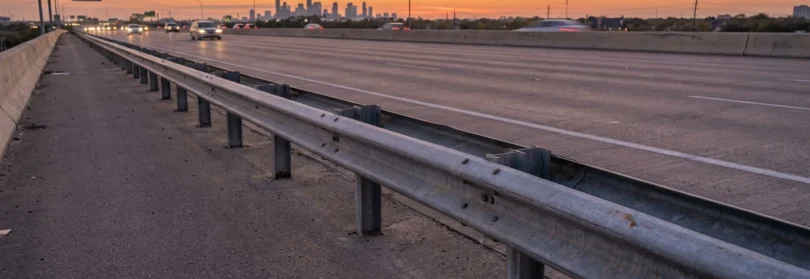
When a guardrail fails during a Houston highway crash, the consequences can be catastrophic. Instead of redirecting a vehicle safely, a defective or poorly maintained guardrail may spear through the passenger compartment, collapse on impact, or send a car into oncoming traffic. Victims often suffer permanent spinal cord injuries, traumatic brain damage, severe burns, or death. If you or a family member experienced a serious guardrail failure crash in Houston, you may have legal options against the parties responsible for designing, manufacturing, installing, or maintaining that guardrail.
If you have been seriously injured in a guardrail crash, Fibich, Leebron, Copeland & Briggs can help you understand your rights. Call 832-925-3015 or contact us today to discuss your case.
Why Guardrail Failures Cause Life-Altering Injuries in Houston
Houston’s sprawling highway network, including I-10, I-45, and the 610 Loop, sees some of the heaviest traffic volumes in the country. Guardrails line these roads to absorb and redirect impact energy during collisions. When a guardrail is defective, improperly installed, or neglected, it transforms from a safety device into a deadly hazard.
Guardrail failure injuries are severe. They include penetration injuries where the rail pierces the vehicle cabin, rollover events when the guardrail fails to contain the vehicle, and high-speed secondary collisions. These cases frequently involve long-term rehabilitation, lost earning capacity, and future medical care costs stretching into millions of dollars.
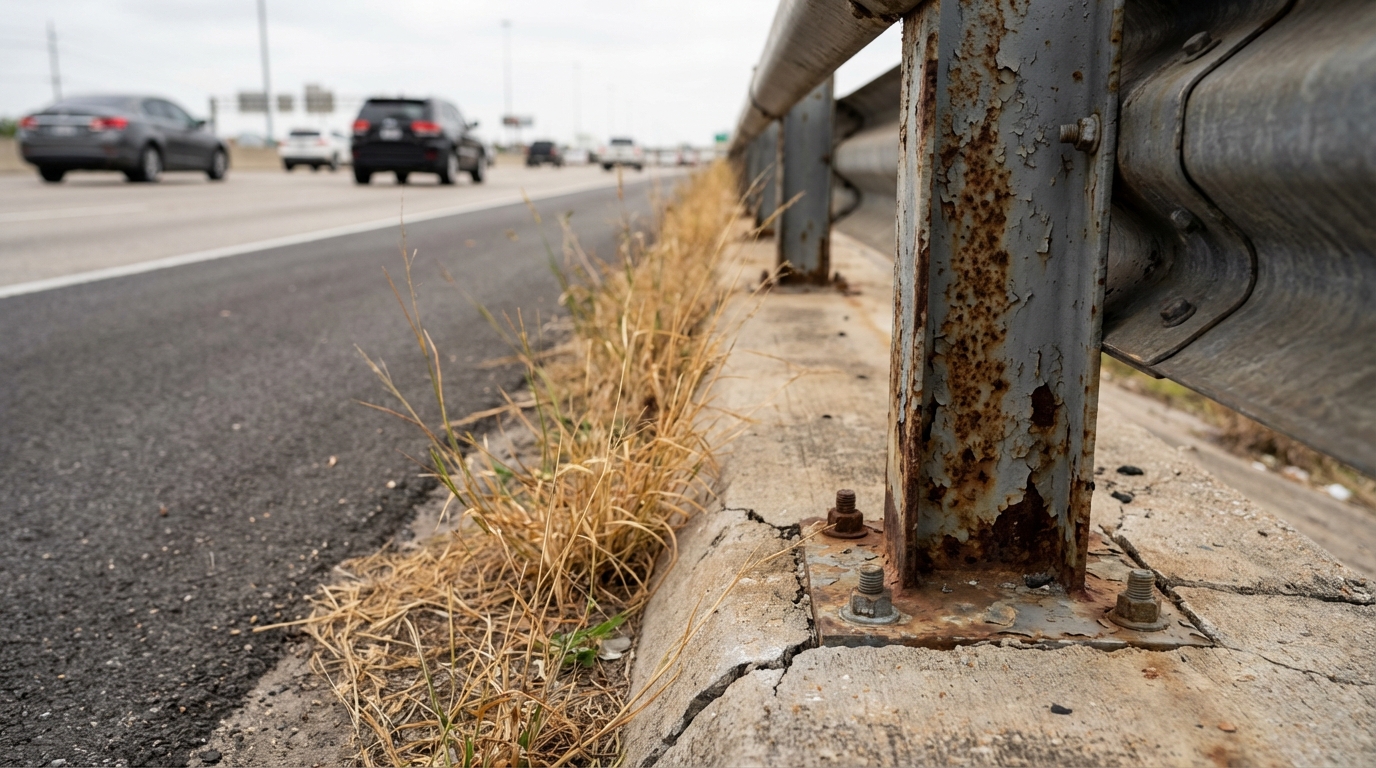
💡 Pro Tip: Photograph the guardrail from multiple angles before repairs occur. Document the condition, connection points, and any visible rust, damage, or missing bolts.
Who Is Liable When a Guardrail Fails in Texas?
Guardrail failure cases in Texas often involve multiple potentially liable parties. Depending on the facts, liability may fall on the guardrail manufacturer, the installation contractor, or a government entity such as TxDOT or the City of Houston responsible for maintenance.
Guardrail Manufacturers and Product Defects
A manufacturer may be liable under product liability theory if the guardrail’s design or manufacturing was defective. Cases involving the ET-Plus guardrail end terminal, for example, have alleged design flaws caused the device to lock up on impact rather than absorbing energy as intended. You can learn more about how defective guardrails cause severe injuries and what legal options may be available.
Installation Contractors and Maintenance Failures
Independent contractors hired to install or maintain guardrails may bear liability if their work was negligent. Improper bolt torque, incorrect post spacing, or wrong soil embedment depth can all cause catastrophic failure. The Texas Tort Claims Act defines “employee” under §101.001(2) to exclude independent contractors, meaning a private company hired by a government entity may be sued directly without the immunities protecting government units.
Government Entities: TxDOT and the City of Houston
When a government entity owns or maintains the guardrail, a more restrictive legal framework applies. Under the Texas Tort Claims Act (TTCA), §101.021, a governmental unit may be liable for personal injury and death caused by a condition or use of tangible personal or real property if the governmental unit would, were it a private person, be liable to the claimant according to Texas law. However, recovery against a government defendant is significantly more difficult than against a private party.
💡 Pro Tip: Identify every potentially responsible party early. Each defendant has different legal rules, deadlines, and immunities.
What Happens If You Hit a Guardrail and the Government Is Responsible?
Suing a government entity in Texas for a guardrail failure requires navigating the Texas Tort Claims Act, which is the sole mechanism for waiving sovereign immunity for tort claims against governmental units. Under TTCA §101.025, sovereign immunity is waived only to the extent of liability created by the Act. The TTCA imposes strict limitations that do not apply to lawsuits against private defendants.
| TTCA Requirement | What It Means for Your Guardrail Claim |
|---|---|
| Six-Month Notice Deadline (§101.101(a)) | You must provide formal written notice to the governmental unit within six months of the crash (for TxDOT). For the City of Houston, the city’s charter requires notice within 90 days. Missing the applicable deadline can bar your claim, although under §101.101(c), a claim is not barred if the governmental unit has actual notice that the claimant received injury. |
| Sovereign Immunity Waiver (§101.021) | Immunity is waived for injuries caused by (1) conditions or use of tangible personal or real property, or (2) the operation or use of a motor-driven vehicle or motor-driven equipment by employees acting within their scope of employment. |
| Discretionary Function Exception (§101.056) | If the government’s decision about guardrail placement or maintenance was discretionary rather than mandatory, the entity may not be liable. |
| Employee Immunity (§101.106) | The TTCA’s election-of-remedies provision generally requires claimants to sue the governmental unit rather than individual employees. |
| Damages Caps (§101.023) | The TTCA limits damages recoverable against a governmental unit, with specific caps depending on whether the entity is a municipality or state agency. |
The discretionary powers exception under §101.056 is particularly significant in guardrail cases. This provision states that the TTCA does not apply to claims based on a governmental unit’s decision not to perform an act if the law leaves that performance to the unit’s discretion.
💡 Pro Tip: The six-month notice requirement under TTCA §101.101(a) (90 days for the City of Houston) is separate from the statute of limitations. Do not confuse these deadlines, and do not rely on the actual notice exception without consulting an attorney.
Critical Deadlines for Guardrail Injury Claims in Texas
Time limits can make or break a guardrail defect injury claim. Under Texas Civil Practice and Remedies Code §16.003, the general statute of limitations for personal injury claims is two years from the date of injury.
For claims against TxDOT, the six-month notice requirement under TTCA §101.101(a) creates an even shorter effective deadline than the two-year statute of limitations. However, for claims against the City of Houston specifically, the effective notice deadline is even shorter, 90 days under the City’s charter, not six months. This notice must reasonably describe the incident, the injury or damage claimed, and the time and place of the incident.
- Two-year statute of limitations for personal injury and property damage claims under Texas Civil Practice and Remedies Code §16.003
- Six-month notice deadline for claims against governmental units under TTCA §101.101(a) (note: City of Houston has a 90-day charter requirement), subject to the limited actual notice exception under §101.101(c)
- Tolling exceptions may apply in limited circumstances, but Texas courts generally interpret these narrowly
How Damages Are Calculated in Houston Guardrail Failure Cases
Serious guardrail injuries in Houston often result in damages extending far beyond initial emergency room bills. When a guardrail failure causes catastrophic outcomes such as spinal cord injury, traumatic brain injury, or amputation, the financial impact can span decades.
Medical Expenses and Future Care Costs
Past and future medical care frequently represents the largest component of damages in guardrail failure cases. Victims who suffer permanent disabilities may require lifelong rehabilitation, adaptive equipment, home modifications, and ongoing physician care. An experienced Houston car accident lawyer can work with medical professionals to project the full scope of these future costs.
Lost Wages and Earning Capacity
When a guardrail injury prevents a victim from returning to their occupation, lost earning capacity becomes central to the claim. This is particularly significant for Houston-area workers in physically demanding industries such as oil and gas, construction, or petrochemical operations. Future lost wages are calculated based on the victim’s age, occupation, earning history, and projected career trajectory.
💡 Pro Tip: Keep detailed records of every missed workday and reduced work capacity. These records directly support your lost wage claims.
Building a Strong Guardrail Failure Case in Texas
Evidence preservation is critical and must begin immediately after the crash. Guardrails are frequently repaired or replaced within days of a serious collision, and once that physical evidence is gone, proving a defect becomes significantly more difficult. An attorney can send spoliation letters to the government entity and any involved contractors demanding they preserve the guardrail, maintenance records, inspection logs, and installation specifications.
Key Evidence in Guardrail Defect Claims
Every guardrail failure case depends on establishing that the guardrail was defective, improperly installed, or inadequately maintained, and that this failure caused or worsened the injuries. Essential evidence includes:
- Photographs and video of the guardrail before repair
- Maintenance and inspection records from TxDOT or the responsible municipality
- Manufacturing specifications and crash-test data for the guardrail model
- Accident reconstruction analysis
- Medical records linking the guardrail failure to specific injuries
💡 Pro Tip: Request a copy of the government entity’s guardrail inspection and maintenance schedule through a public records request immediately.
Frequently Asked Questions
1. What happens if you hit a guardrail and it malfunctions?
If you strike a guardrail and it fails to perform as designed, you may have a legal claim against the manufacturer, the installation contractor, and potentially the government entity responsible for maintaining it. A guardrail that spears through a vehicle, collapses, or fails to redirect a car on impact may be considered defective.
2. How long do I have to file a guardrail injury lawsuit in Houston?
Under Texas Civil Practice and Remedies Code §16.003, you generally have two years from the date of injury to file a personal injury lawsuit. However, if your claim involves a government entity like TxDOT, you must also provide formal written notice within six months of the crash under TTCA §101.101(a); for the City of Houston, the city’s charter requires notice within 90 days.
3. Can I sue TxDOT for a defective guardrail in Houston?
You may be able to sue TxDOT under the Texas Tort Claims Act if the guardrail qualifies as a condition of tangible personal or real property under §101.021. However, the TTCA includes significant limitations, including the discretionary function exception under §101.056 and statutory caps on damages under §101.023.
4. What kind of compensation can I recover for a guardrail injury?
Compensation in serious guardrail failure cases may include past and future medical expenses, lost wages and future earning capacity, pain and suffering, and, in wrongful death cases, loss of companionship and support. Claims against government entities are subject to statutory damages caps under TTCA §101.023, which may limit total recovery.
5. What if the guardrail was installed by a private contractor?
Private installation contractors are not protected by the sovereign immunity provisions of the Texas Tort Claims Act. Because the TTCA’s definition of “employee” under §101.001(2) excludes independent contractors, a private company that negligently installed or maintained a guardrail can be sued directly under standard negligence theories.
Protecting Your Rights After a Houston Guardrail Crash
A guardrail failure on a Houston highway can change your life in an instant, leaving you with catastrophic injuries, overwhelming medical bills, and an uncertain future. These cases involve complex questions of product liability, government immunity, and multi-party responsibility. The strict deadlines imposed by Texas law, particularly the six-month government notice requirement (and the City of Houston’s 90-day charter requirement), mean that delay can permanently eliminate your legal options.
If you or a loved one suffered serious injuries in a guardrail failure crash in Houston, Fibich, Leebron, Copeland & Briggs is prepared to investigate your case and fight for the compensation your family deserves. Call 832-925-3015 or reach out to our team to get started.