
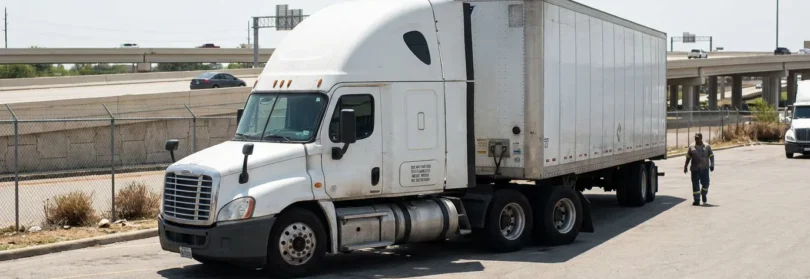
The Federal Insurance Safety Net Behind Catastrophic Houston Truck Crashes
Key Takeaways: An MCS-90 endorsement is a federally required attachment to an interstate for-hire motor carrier’s liability policy that obligates the insurer to pay final judgments for bodily injury or property damage caused by negligent commercial vehicle operation, even when the underlying policy would deny coverage, subject to the insurer’s right to seek reimbursement. It does not establish fault or replace the need to prove negligence and causation, and generally applies only up to federal minimums, commonly $750,000 for most 18-wheelers. Courts treat it as a last-resort safety net when no other insurance is available. Brokers and freight forwarders post a $75,000 surety bond instead. Texas financial-responsibility minimums are far lower than federal levels, so catastrophic Houston truck claims often depend on federal coverage, excess policies, additional defendants, or underinsured motorist coverage.
When an 18-wheeler crushes a passenger vehicle on the North Loop or along the I-10 energy corridor, injuries are rarely minor. Families face spinal cord damage, traumatic brain injury, amputations, and funeral arrangements, while a motor carrier’s insurer often begins building its defense within hours. The MCS-90 endorsement is a federally prescribed attachment to a motor carrier’s liability policy, required of many interstate for-hire carriers, and functions as a public-protection guarantee: if the carrier is found legally liable, the insurer generally must pay the final judgment up to the required minimum, even when the underlying policy might otherwise deny coverage. For catastrophically injured victims, that endorsement can mean the difference between a paper judgment and real recovery.
If you or a loved one suffered life-altering injuries in a collision with a commercial truck, the trial attorneys at Fibich, Leebron, Copeland & Briggs are prepared to identify every layer of coverage potentially available to your family. Call 713-751-0025 or contact us now to discuss your case.
Why the MCS-90 Exists at All
Congress created the federal financial-responsibility framework because interstate trucking companies structured themselves to limit accountability. Shell entities, leased tractors, owner-operator arrangements, and policy exclusions made it possible for carriers to cause devastating harm and point to a coverage gap. The endorsement closes that gap by obligating the insurer to satisfy judgments against the carrier regardless of certain policy defenses, while preserving the insurer’s right to seek reimbursement.
The endorsement is not a substitute for proving liability. It does not create fault, expand damages, or eliminate the need to establish negligence and causation. It operates only after a claimant obtains a final judgment and applies within federally required limits. Insurers frequently argue the endorsement is inapplicable when other collectible coverage exists.
How MCS-90 Endorsement Truck Accident Claims Actually Unfold in Houston
In many serious cases, the endorsement moves from background detail to central issue only when coverage is contested. Investigation begins with who owned the tractor and trailer, who held operating authority, and whose insurance was in force on the crash date. Houston’s port and petrochemical traffic can make these arrangements especially tangled.
Insurance filings are generally a precondition to operating authority under federal law. FMCSA generally will not grant operating authority registration until minimum financial responsibility levels are on file, under 49 CFR Part 387 and 49 U.S.C. §§ 13906, 31138, and 31139. Reviewing the FMCSA insurance requirements database is often one of the first investigative steps in an 18-wheeler injury claim.
Minimum Coverage Levels That Apply
The commonly cited $750,000 minimum generally applies to for-hire property carriers transporting non-hazardous freight in interstate commerce with vehicles having a GVWR of 10,001 pounds or more, which covers most 18-wheelers involved in Houston crashes. Vehicles under 10,001 pounds GVWR hauling non-hazardous property generally require $300,000. Higher minimums apply to hazardous cargo, a significant consideration given tanker and petrochemical hauling through Harris County.
| Carrier Type | Federal Minimum |
|---|---|
| For-hire property carrier, GVWR ≥ 10,001 lbs | $750,000 |
| For-hire property carrier, GVWR < 10,001 lbs | $300,000 |
| For-hire carriers of certain hazardous materials | $1,000,000 |
| For-hire and private carriers of explosives, poison gas, or radioactive materials | $5,000,000 |
| Property brokers and freight forwarders (BMC-84/BMC-85) | $75,000 surety bond or trust fund |
Insurance obligations vary meaningfully by entity type. Brokers and freight forwarders, often named alongside carriers in Houston truck litigation, generally do not carry MCS-90 endorsements. Under 49 CFR 387.307, property brokers instead post a $75,000 surety bond or trust fund using forms BMC-84 or BMC-85, and those instruments generally secure the broker’s transportation-contract obligations rather than serving as bodily injury liability coverage. Naming the wrong defendant and expecting endorsement coverage is a common and costly error.
💡 Pro Tip: Ask that a spoliation letter go out immediately to preserve electronic control module data, driver qualification files, and hours-of-service logs. Coverage questions can take months to resolve, but evidence can disappear in weeks.
How Texas Financial Responsibility Rules Compare
Texas maintains its own financial-responsibility framework, and the contrast with federal standards is stark. Under Tex. Transp. Code § 601.072, for policies effective on or after January 1, 2011, minimum liability coverage is $30,000 for bodily injury to or death of one person, $60,000 for two or more persons, and $25,000 for property damage. Those figures are far below federal minimums for interstate 18-wheelers. That gap explains why catastrophic Houston truck crash claims often depend on federal coverage.
Texas also has its own certification mechanism. The Texas motor vehicle financial responsibility statute provides under Tex. Transp. Code § 601.088(a) that the chapter does not apply to or affect a policy required by another law of this state, but if endorsed to conform to chapter requirements, it may be certified as evidence of financial responsibility.
When Federal Minimums Are Not Enough
Catastrophic injuries can exhaust $750,000 in months. A single spinal cord injury can generate lifetime attendant care, home modification, adaptive equipment, and repeated surgical intervention, alongside decades of lost earning capacity. When trucking liability coverage in Texas, even with federal minimums backed by an endorsement, proves insufficient, an injured victim may look to underinsured motorist coverage if purchased and applicable.
Texas defines when a vehicle may count as underinsured. Tex. Ins. Code § 1952.103 describes an underinsured motor vehicle as one with collectible liability limits originally lower than, or reduced by payment of claims arising from the same accident to, an amount less than the limit of liability stated in the underinsured coverage of the insured’s policy. Whether that coverage applies is fact-dependent and may involve consent-to-settle and subrogation questions.
Multi-party liability can produce more meaningful recovery than any single policy. Depending on facts, potentially responsible parties may include the motor carrier, driver, separate trailer owner, maintenance contractor, shipper that loaded cargo improperly, or component manufacturer. Our discussion of how a Houston attorney proves trucking negligence explains what that investigation involves.
Deadlines That Can End a Claim Before Coverage Ever Matters
No endorsement is likely to help a claimant who files too late. Houston truck crash victims generally have two years from the date the cause of action accrues to file a personal injury lawsuit in Texas under Tex. Civ. Prac. & Rem. Code § 16.003(a). Wrongful death claims arising from a fatal 18-wheeler collision are likewise generally subject to a two-year deadline under § 16.003(b), typically running from the date of death. Property damage claims also generally run two years from accrual.
Tolling and discovery-rule arguments exist, but courts interpret them narrowly. They generally apply only in limited circumstances depending heavily on facts, such as claims by minors or certain fraudulently concealed injuries. Once a limitations period expires, a claim generally cannot be pursued absent a recognized exception.
💡 Pro Tip: If a governmental entity such as a transit authority or municipal fleet may share fault, notice requirements can be far shorter than two years. Flag that possibility immediately.
Practical Steps After a Serious Truck Collision
- Obtain the carrier’s USDOT and MC numbers from the crash report and the tractor door.
- Photograph placards, trailer markings, and any lease or logo signage before repairs occur.
- Preserve all medical records, wage documentation, and out-of-pocket expense receipts.
- Decline recorded statements to the carrier’s insurer until you have counsel.
- Request that black-box and telematics data be preserved in writing.
What a Coverage Fight Typically Looks Like
Insurers often do not concede endorsement applicability without a fight. Common defenses include arguments that the vehicle was not being used in interstate commerce, that the entity was not a for-hire carrier subject to the requirement, that other collectible insurance satisfies the obligation, or that the endorsement reaches only the statutory minimum. Outcomes remain fact-sensitive.
Documentation frequently decides the issue. Bills of lading, trip records, dispatch logs, and lease agreements can establish the interstate character of the haul more persuasively than any witness. Building that record early, before memories fade and files are purged, may strengthen a claimant’s position considerably.
Frequently Asked Questions
1. Does an MCS-90 endorsement mean I automatically get paid?
No. The endorsement obligates an insurer to satisfy a final judgment against the carrier within federally required limits, but you must first establish liability and damages. It is a payment mechanism, not a finding of fault.
2. How do I find out whether a trucking company has one?
Federal law generally conditions operating authority on filed proof of financial responsibility, so this information often appears in public FMCSA records. Counsel may also obtain the actual policy and endorsement through formal discovery once litigation begins.
3. What if the truck was operating only within Texas?
Purely intrastate operations may fall under different state requirements rather than the federal endorsement framework, although a trip wholly within Texas can still be part of interstate commerce depending on the origin and ultimate destination of the freight.
4. Can a broker’s bond be reached in my case?
Brokers and freight forwarders generally post surety bonds or trust funds rather than carrying this endorsement. Those instruments are generally limited to $75,000 and typically secure contractual transportation obligations rather than personal injury judgments. Whether a broker faces independent liability for negligent carrier selection is a separate legal question.
5. Does the endorsement cap what my family can recover?
The endorsement generally guarantees payment up to the applicable federal minimum, but a judgment may exceed that figure, and the carrier’s actual policy limits may be higher. Additional recovery may be available through excess policies, other defendants, or underinsured motorist coverage.
Protecting the Full Value of a Devastating Loss
The MCS-90 endorsement reflects a federal judgment that trucking companies should not externalize the cost of the harm they cause. For Houston families confronting permanent disability, decades of medical care, and sudden loss of a household’s primary income, understanding where coverage comes from is inseparable from understanding what accountability may realistically be achievable. These cases involve corporate defendants, layered insurance structures, and short deadlines, and they reward early, disciplined investigation.
Our firm is respected for handling catastrophic commercial vehicle cases and prepares every matter as though it will be tried. If your family is facing life-altering injuries, our Houston truck accident lawyer team at Fibich, Leebron, Copeland & Briggs is ready to help. Call 713-751-0025 or request a consultation today.
Disclaimer: This content is for informational purposes only and is not legal advice. Every case is unique, and results may vary. Consult an attorney about your specific circumstances.