
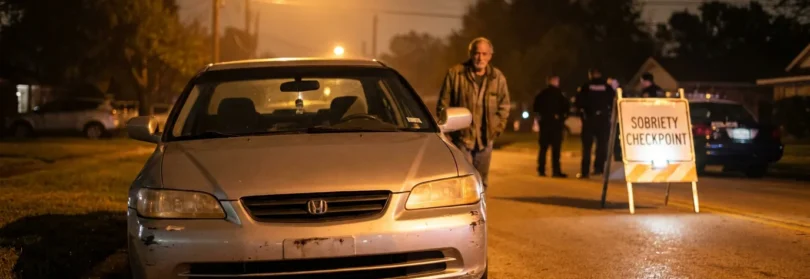
Understanding How a Drunk Driver’s Crime Becomes Civil Liability in Texas
Key Takeaways: Negligence per se lets injured victims establish a drunk driver’s fault by proving violation of a safety statute. Since driving while intoxicated is criminal under Texas law, it provides a powerful foundation for civil recovery. The doctrine establishes the duty and breach elements of negligence, leaving only causation and damages to prove. It applies when a defendant violates a safety law meant to protect a class including the victim against the harm suffered. In Houston DWI cases, liability can extend to alcohol providers who overserved visibly intoxicated patrons and employers when commercial vehicles were involved. Defendants may raise narrow exceptions like sudden emergency or impossibility of compliance, though voluntary intoxication does not excuse violations. A two-year filing deadline applies, so acting early protects evidence and recovery rights.
Negligence per se allows an injured victim to establish a defendant’s fault by proving violation of a safety statute rather than building a case on ordinary carelessness. In Houston drunk driving cases, this matters because driving while intoxicated is criminal under Texas law. A defendant who violates a statute without excuse is automatically considered to have breached their duty of care and is negligent as a matter of law. When catastrophic injuries result from an impaired driver breaking the law, negligence per se transforms a criminal violation into a foundation for full civil recovery.
If you or a loved one survived a serious impaired-driving wreck, the team at Fibich, Leebron, Copeland & Briggs is ready to pursue accountability. Call 832-925-3015 or reach us through our confidential case review form to discuss your rights.

The Legal Doctrine That Turns a Statutory Violation Into Negligence
Negligence per se operates as a shortcut through two of the four elements every injury claim must prove. A standard negligence case requires duty, breach, causation, and damages. According to legal commentary from Justia, negligence per se is triggered when someone violates a safety law, establishing duty and breach. You still must prove the final two elements: the violation caused your injuries and you suffered damages.
The doctrine applies only to safety statutes designed to protect people like the victim. Legal authorities recognize three conditions: the at-fault party violated a safety-related law, the law was created to protect a class including you, and the harm suffered is the type the law was meant to prevent. This framework mirrors modern tort principles requiring the statute to protect against the accident type and harm caused.
Once threshold conditions are met, the victim’s evidentiary burden narrows. You must still establish the violation was both cause in fact and proximate cause of injury, typically a jury question. Outcomes depend on specific facts, and causation remains contested in many cases.
💡 Pro Tip: Preserve criminal case records early. A drunk driving conviction or charge can become central evidence in your civil claim, so request police reports, toxicology results, and charging documents immediately.
Why a Houston Drunk Driving Accident Lawyer Relies on Texas DWI Statutes
The foundational statute for impaired-driving liability in Texas criminalizes operating a vehicle while intoxicated. Under Texas law, operating a motor vehicle in a public place while intoxicated is criminal, and this statute anchors negligence per se arguments in civil cases. When a driver violates this statute and causes an accident, the violation establishes breach of duty without requiring further proof of unreasonable conduct. A skilled Houston drunk driving accident lawyer uses this as the negligence per se theory foundation.
Texas defines intoxication by measurable blood alcohol threshold with escalating penalties. A BAC of 0.08% or higher constitutes intoxication, and 0.15% or higher elevates the charge to a Class A misdemeanor. These thresholds appear in Texas Penal Code provisions on intoxication offenses (Texas Penal Code § 49.04).
When impaired driving produces devastating outcomes, criminal exposure climbs sharply. When a drunk driver causes serious bodily injury, defined as injury creating substantial risk of death, serious permanent disfigurement, or protracted loss of a bodily member or organ, the offense becomes a third-degree felony. In civil claims, this conviction or charge strongly supports negligence per se and may enable exemplary damages (Texas Penal Code § 49.07). Fatal crashes constitute intoxication manslaughter, a second-degree felony (Texas Penal Code § 49.08).
Expanding Liability Beyond the Impaired Driver
Texas DWI negligence cases frequently involve more than the drunk driver. When serious injuries and mounting medical costs are at stake, identifying every responsible party is essential for meaningful recovery. Drunk driving liability in Texas can extend to alcohol providers and employers.
Establishments that overserve visibly impaired patrons may face civil exposure. Texas law criminalizes selling alcoholic beverages to an intoxicated person with criminal negligence, and similar violations can support negligence per se. Civil claims against Houston bars or restaurants that continued serving a visibly intoxicated patron who later caused a crash are typically pursued under Texas’s Dram Shop Act, requiring proof the provider served someone obviously intoxicated to the extent they presented clear danger. First violations carry fines up to $500 and up to one year in jail, with higher penalties for repeat violations (Texas Alcoholic Beverage Code § 101.63).
When the impaired driver was working, the employer may share civil responsibility. When a Houston drunk driving crash involves a commercial vehicle like a delivery truck or company car, the employer may face liability for employee negligence under respondeat superior when the employee was acting within employment scope. In commercial motor vehicle cases, Texas law allows an employer that stipulates the driver was its employee acting within scope to limit exposure to respondeat superior and seek bifurcated trial. This vicarious liability can work alongside negligence per se against the driver to expand liable defendants and available compensation (Texas Civil Practice and Remedies Code § 72.054). Our overview of what happens after a drunk driving crash in Houston explains steps that protect these claims.
💡 Pro Tip: If the at-fault driver fled, the case may grow stronger. Texas law requires drivers in collisions reasonably likely to result in injury or death to immediately stop, return to the scene, determine if persons need aid, and remain until legally discharged. A drunk driver who flees violates this statute independently, potentially supporting an additional negligence per se claim (Texas Transportation Code § 550.021).
How Texas Compares to Other States on Statutory Violations
Not every state treats a broken safety law the same way. Justia identifies three approaches: negligence as a matter of law, rebuttable presumption, and evidence of negligence.
| Approach | Effect of a Statutory Violation |
|---|---|
| Negligence as a matter of law | Treated as conclusive proof of breach |
| Rebuttable presumption | Presumed negligent unless defendant rebuts |
| Evidence of negligence | Considered as one factor among many |
Pursuing Exemplary Damages in Serious Cases
Drunk driving is often viewed as conduct justifying punishment beyond compensation. In Houston drunk driving accident lawsuits, victims may seek exemplary damages to punish egregious conduct. Before discovering a defendant’s net worth to support such claims, Texas law requires the court to find in writing there is substantial likelihood of success on the merits (Texas Civil Practice and Remedies Code § 41.0115). These damages are never automatic.
Defenses and Exceptions That Can Limit the Doctrine
Negligence per se is powerful but not absolute. A Houston car accident attorney anticipates recognized exceptions when building serious impaired-driving cases. Common defenses include sudden emergency, impossibility of compliance, greater risk from compliance, and incapacity such as sudden medical events.
Modern tort principles recognize narrow excuses for noncompliance. Exceptions include cases where the statute is unclear, the actor exercised reasonable care attempting to comply, or noncompliance resulted in less harm than compliance. Courts interpret these narrowly, and applicability depends on facts. Recognized excuses are summarized in this overview of negligence per se principles.
Defense categories often raised include:
- Sudden emergency leaving no reasonable opportunity to comply
- Impossibility of compliance under circumstances
- Sudden, unexpected medical event like a heart attack while driving
💡 Pro Tip: Voluntary intoxication generally does not excuse statutory violations. Incapacity defenses usually require unforeseeable medical events, not chosen impairment.
How a Houston DWI Crash Claim Builds Toward Full Recovery
Serious impaired-driving wrecks frequently leave families facing permanent disability and overwhelming costs. When survivors confront spinal cord damage, traumatic brain injury, or loss of a loved one, damages should account for the long arc of harm. A focused Texas drunk driving laws strategy anchors recovery in tangible losses like lost wages, diminished earning capacity, and future medical care.
Strong cases are built on evidence, not assumptions. Police reports, toxicology data, witness statements, and criminal charging records support negligence per se while documenting damages. Visit our Houston car accident attorney practice page to learn our approach.
💡 Pro Tip: Texas applies a general two-year deadline to most injury claims, with narrow exceptions. Acting early protects evidence and filing rights.
Frequently Asked Questions
1. Does a DWI conviction guarantee I win my civil case?
No outcome is guaranteed. A conviction strongly supports duty and breach elements through negligence per se, but you must still prove causation and damages, and defenses may apply.
2. Can I sue a bar that overserved the driver?
Possibly, under certain circumstances. A provider who continued serving a patron obviously intoxicated to the point of being clear danger may face liability under Texas’s Dram Shop Act, subject to proof and facts.
3. What if the drunk driver fled the scene?
Leaving is a separate offense. Under Texas Transportation Code § 550.021, fleeing may support an additional negligence per se claim and can elevate criminal liability, often strengthening civil cases.
4. Are punitive damages available in drunk driving cases?
They may be available in egregious cases. Texas Civil Practice and Remedies Code § 41.0115 imposes a procedural threshold before net-worth discovery. These damages are never automatic.
5. How long do I have to file a claim in Texas?
Texas generally applies a two-year statute of limitations to injury claims. Exceptions are interpreted narrowly, so prompt action preserves your rights.
Holding Impaired Drivers Accountable for Life-Altering Harm
Negligence per se gives victims of serious Houston drunk driving crashes a direct path to establishing fault by tying criminal conduct to duty and breach elements of civil claims. From foundational DWI statutes to dram shop and employer liability, Texas law offers multiple avenues to hold every responsible party accountable when impaired driving causes catastrophic injury or death. Because each case turns on its own facts, working with a trial-ready legal team focused on high-stakes recovery makes a meaningful difference.
If your family is facing the aftermath of a devastating impaired-driving wreck, the attorneys at Fibich, Leebron, Copeland & Briggs are prepared to fight for full accountability. Call 832-925-3015 today or request your confidential consultation to take the first step toward meaningful recovery.