
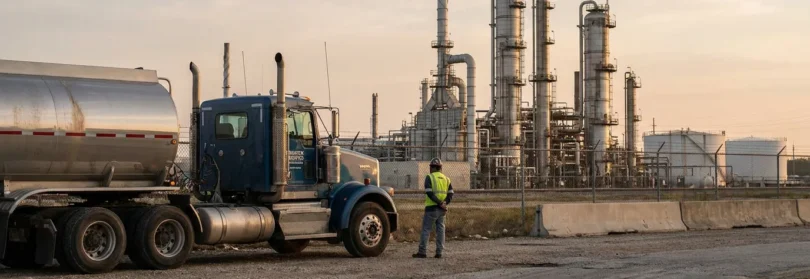
Untangling Liability After a Houston Refinery Blast Injures a Trucker
Key Takeaways: When a Houston refinery explosion injures a truck driver, liability rarely falls on just one party. Refinery owners, general contractors, trucking companies, and maintenance vendors can each share fault under Texas law. On-site drivers are typically treated as business invitees, triggering specific premises-liability duties to warn of non-obvious hazards. However, a refinery owes no duty to warn of dangers equally known to the worker, so proving superior knowledge of a concealed hazard is often decisive. Critically, under Tex. Labor Code § 417.001(a), injured drivers may pursue both workers’ compensation benefits and a separate third-party lawsuit for full damages. Texas also provides anti-evasion protections against shell subcontracts and negligence per se theories built on hazardous chemical-safety violations. Because outcomes depend on specific contracts, worker classifications, and facts of control, early investigation is essential to securing full accountability.
When a Houston refinery explosion injures a truck driver, liability rarely rests on a single party. Refinery owners, general contractors, trucking companies, and equipment maintenance providers can each share fault, and Texas law allows injured drivers to pursue multiple recovery paths simultaneously. These blasts often leave drivers with severe burns, lost limbs, and permanent disability that ends careers and devastates families financially. Understanding who answers for those injuries, and how Texas workers’ compensation interacts with third-party tort claims, is the first step toward accountability.
📞 If you or a loved one suffered catastrophic burns or other life-altering injuries in a refinery blast, the team at Fibich, Leebron, Copeland & Briggs is ready to investigate. Call us at 832-925-3015 or reach out through our secure contact form.

Why Refinery Explosion Cases Involve Layered, Complex Liability
Petrochemical facilities operate through a web of contractors, subcontractors, and vendors, making liability genuinely complicated. A tanker driver delivering or hauling product may work for a trucking company while performing work inside a refinery owned by a separate corporation. When an explosion occurs, each entity may try to push responsibility onto another. Sorting out who controlled the dangerous condition, who failed to warn, and who violated safety duties requires aggressive investigation.
Texas treats workers of independent contractors on refinery grounds as business invitees. In Delhi-Taylor Oil Corp. v. Henry, 416 S.W.2d 390 (Tex. 1967), the court confirmed that a contractor and its employees were business invitees of the refinery. That status triggers specific premises-liability obligations that a skilled Houston industrial accident attorney can use to build a third-party claim.
💡 Pro Tip: After any refinery blast, photographs, maintenance logs, OSHA citations, and chemical inventories can disappear quickly. Send a written evidence-preservation demand early to protect critical proof.
The Refinery Owner’s Duty to Warn and Protect
A Texas land owner or occupier can be relieved of liability only by taking proper precautions to protect invitees or warning them of non-obvious dangers. The Delhi-Taylor court explained this is a conditional defense, not an automatic shield, and whether a refinery satisfied it is usually fact-intensive.
There is an important limit. The court held that an owner owes no duty to warn invitees of dangers as well known to them as to the owner. In Delhi-Taylor, a worker was severely injured when a dragline punctured a toluene pipeline near his welding operation, and escaping vapors ignited. The Texas Supreme Court reversed judgment for the worker, concluding he failed to establish the refinery breached its duty to warn. This shows that equal-knowledge defenses can defeat claims, which is why proving the refinery had superior knowledge of a concealed hazard is often decisive.
When Hazardous Chemical Violations Become Negligence Per Se
Texas requires facilities handling hazardous chemicals to inform workers of exposures, maintain Material Safety Data Sheets, provide training, and supply protective equipment. Under the Texas hazardous chemical law at Tex. Health & Safety Code § 502.017(b), employees who may be exposed must be informed, given access to workplace chemical lists and MSDSs, trained on hazards, and provided appropriate protective equipment. A refinery’s failure to meet these duties toward an on-site truck driver could support a negligence per se theory.
The same statute protects workers who speak up. Tex. Health & Safety Code § 502.017(c) prohibits discharge, discipline, or discrimination against employees who file complaints, assist inspectors, or exercise rights under the chemical law.
💡 Pro Tip: Request the facility’s chemical inventory and training records during litigation. Gaps in MSDS access or training can transform general negligence claims into stronger statutory violation cases.
Workers’ Compensation Versus Third-Party Claims
An injured truck driver in Texas is not limited to workers’ compensation benefits alone. Under Tex. Labor Code § 417.001(a), an employee or legal beneficiary may seek damages from a liable third party and also pursue workers’ compensation benefits. This dual-path recovery is one of the most valuable rights for refinery blast victims, because workers’ comp rarely covers the full scope of future medical care, lost earning capacity, and family financial strain.
How a driver is classified determines who the responsible employer is. Tex. Labor Code § 406.122(a) presumes that a person performing work for a general contractor is that contractor’s employee unless the person operates as an independent contractor or is hired as an employee of one. A subcontractor and its employees are not employees of the general contractor when the subcontractor operates independently and has signed a written agreement assuming employer responsibilities, under Tex. Labor Code § 406.122(b).
| Recovery Path | Source of Authority | What It Covers |
|---|---|---|
| Workers’ compensation | Tex. Labor Code Ch. 406 | Medical care and a portion of lost wages, regardless of fault |
| Third-party lawsuit | Tex. Labor Code § 417.001(a) | Full damages against a liable refinery, contractor, or vendor |
How the Comp Shield Can Limit Some Claims
Texas generally bars injured contract workers from suing employers that provide workers’ compensation coverage. A Center for Public Integrity report explained that a Texas worker generally cannot sue his employer because the company carried workers’ comp, and that a property owner treated as its own general contractor may also be shielded if it provides comp to subcontractors. You can review reporting on limited remedies for injured refinery contractors.
That shield is not absolute. A general contractor providing comp coverage to a subcontractor becomes the subcontractor’s employer only for workers’ compensation purposes under Tex. Labor Code § 406.123(a) and (e); while this can extend the exclusive-remedy bar, it does not eliminate separate third-party liability of other parties, such as a refinery owner or other on-site contractors. Whether the shield applies depends on specific contracts and facts of control.
The Anti-Evasion Rule and Subrogation
Texas closes the loophole of using shell subcontracts to dodge employer liability. Under Tex. Labor Code § 406.124, if an insured contractor subcontracts work intending to avoid liability as an employer, an injured subcontractor employee is treated as that contractor’s employee for comp and retains a separate right of action against the subcontractor.
When a driver collects benefits, the carrier that paid them gains subrogation rights. Tex. Labor Code § 417.001(b) provides that the carrier steps into the injured worker’s shoes and may pursue the liable third party, but any recovery above the carrier’s subrogation interest must be returned to the injured driver. A trusted petrochemical explosion injury lawyer can negotiate these liens so more recovery reaches the injured family.
💡 Pro Tip: Do not assume accepting workers’ comp ends your case. The dual-path structure often means a separate third-party lawsuit remains available.
What Recovery Can Look Like in Catastrophic Refinery Cases
Refinery explosions produce life-altering injuries, and damages should reflect that severity. Severe burns frequently require years of surgeries, skin grafts, and rehabilitation, alongside permanent disfigurement and disability. In layered-liability cases, multiple corporate defendants and their insurers may share responsibility, expanding recovery sources.
Damages commonly include:
- Past and future medical care, including reconstructive and burn-unit treatment
- Lost wages and diminished earning capacity
- Pain, disfigurement, and physical impairment
- Losses to families when a blast causes wrongful death
When OSHA cited both a refinery owner and contractor after a worker was severely burned, the fines were reportedly $10,000 and $2,000. Those minimal penalties show why civil claims, rather than regulatory citations, are often the only meaningful avenue for full accountability.
Frequently Asked Questions
1. Can a truck driver sue a refinery after collecting workers’ compensation?
Generally, yes. Under Tex. Labor Code § 417.001(a), a driver may pursue workers’ comp and also seek damages from a liable third party such as a refinery owner.
2. Who counts as the truck driver’s employer for workers’ comp?
It depends on classification. Tex. Labor Code § 406.122 presumes a worker is the general contractor’s employee unless the worker is a true independent contractor or works under a written agreement in which a subcontractor assumes employer duties.
3. Does a refinery always owe a duty to warn truck drivers of hazards?
Not always. Under Delhi-Taylor Oil Corp. v. Henry, a refinery owes no duty to warn of dangers equally known to the invitee, so proving superior knowledge of a concealed hazard is essential.
4. What happens to my recovery if a comp carrier has a lien?
The carrier is subrogated under Tex. Labor Code § 417.001(b), but any amount recovered above its subrogation interest must be paid to you. These liens can often be negotiated.
5. Can my employer retaliate if I reported unsafe chemical conditions?
No. Tex. Health & Safety Code § 502.017(c) prohibits discharge, discipline, or discrimination against workers who report violations or assist inspectors.
Holding the Right Parties Accountable After a Refinery Blast
Determining liability after a Houston refinery explosion injures a truck driver requires untangling premises-liability duties, contractor relationships, workers’ compensation rules, and hazardous chemical obligations. Texas law gives injured drivers meaningful tools, including the right to pursue both comp benefits and a separate third-party claim, statutory anti-evasion protections, and negligence per se theories built on chemical-safety violations. Because outcomes turn on specific contracts, classifications, and site facts, early investigation matters enormously. The goal is full accountability and compensation reflecting permanent disability, lost income, and future medical care, not a quick settlement.
📞 If a refinery blast has changed your family’s life, do not face corporate defendants and their insurers alone. Speak with a dedicated houston refinery explosion lawyer at Fibich, Leebron, Copeland & Briggs by calling 832-925-3015 or visiting our firm’s website to protect your rights and pursue the recovery you deserve.