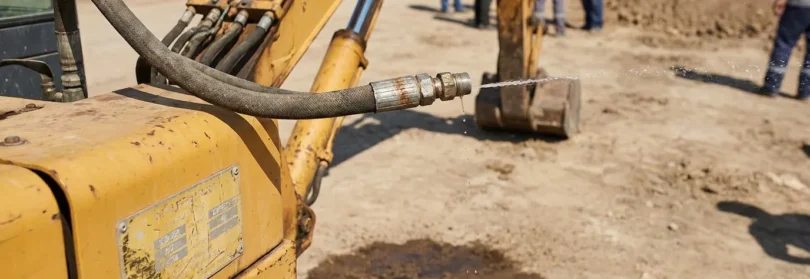
When a Tiny Puncture Becomes a Surgical Emergency
Key Takeaways: A hydraulic pinhole injury can look harmless because the entry wound is tiny and may barely hurt or bleed. But fluid forced in at pressures often above 2,000 psi spreads deep into tendons, nerves, and blood vessels, where it keeps destroying tissue. Some studies report amputation rates of 30% to 48%, and surgery delayed more than about 6 to 10 hours is tied to much worse results. Injured workers should go to the ER right away, say the injury came from a high-pressure line, and name the fluid. Texas law generally requires notice to the employer within 30 days and a workers’ comp claim within one year. A separate deadline, usually two years, applies to personal injury lawsuits. Beyond workers’ comp, injured workers may be able to sue hose or fitting makers, well operators, contractors, or employers without comp coverage. Be careful about signing waivers after an injury, and keep the failed equipment as evidence.
A hydraulic pinhole injury can look like a pinprick, but it may be one of the worst hand injuries an oilfield worker can suffer. A burst hose or failed fitting can force hydraulic oil, grease, or other fluid through the skin at pressures often above 2,000 psi. The fluid can travel deep into tendons, nerves, and blood vessels. The entry wound may barely bleed and may not hurt much at first. Hours later, swelling, tissue death, and infection can lead to repeated surgery or amputation. For a Houston oilfield worker who supports a family with their hands, that can mean permanent disability and lost earning power. Texas legal deadlines generally start on the day of the injury, so waiting to see how the wound looks can put both your hand and your claim at risk.
If you or a family member lost hand function or needed surgery after a high-pressure injection injury, the trial lawyers at Fibich, Leebron, Copeland & Briggs can review whether a contractor, site operator, or equipment maker should be held responsible. Call 713-751-0025 or contact our Houston team to talk through your situation.

How a Hydraulic Pinhole Injury Destroys Tissue From the Inside
A hydraulic pinhole injury does most of its damage under the skin, where you can’t see it. Hydraulic lines, grease guns, and paint sprayers can push fluid hard enough to break through skin and spread between layers of tissue. Once inside, the fluid can move along tendon sheaths into the palm, wrist, and sometimes the forearm.
Doctors describe these wounds as misleading because the entry point is so small compared with the damage underneath. A worker may bandage the spot and go back to work. Even doctors who rarely see these injuries can underestimate them, which is one reason they can end in avoidable amputations.
Why the Injected Substance Matters
The type of fluid, how much got in, and the pressure behind it all shape the tissue damage. Hydraulic fluid is among the most severe because its chemicals cause strong swelling and can kill tissue directly. Grease and paint cause their own kinds of damage. Material left in the tissue keeps causing harm, which is why surgeons usually need to remove it.
The Delayed Symptoms That Fool Workers
Pain, swelling, pale or discolored skin, and numbness often show up hours after the injury. By then, blood flow to the finger may already be cut off. A worker who felt fine at the end of a shift can wake up with a swollen, stiff hand that needs emergency surgery.
Why Every Hour Counts
How fast a worker gets treated is one of the best predictors of whether they keep the injured finger or hand. According to high-pressure injection injury research, these injuries generally call for emergency surgery to open the wound and remove contaminated tissue. Simply cleaning and closing the wound usually isn’t enough. Some studies report amputation rates of 30% to 48%, depending on the substance and how quickly treatment started.
Studies tie surgery delayed more than about 6 to 10 hours to much worse results. The delay can come from the worker, a supervisor who said to "walk it off," or an urgent care visit that treated the wound as minor. When delay leads to amputation, the long-term effects can include:
- Repeated hand surgeries, skin grafts, and months of therapy
- Permanent loss of grip strength, dexterity, or the finger or hand itself
- Being unable to return to rig work or other skilled trades
- Lost wages now and lower earning power for the rest of a career
- Chronic pain, nerve damage, and the emotional toll of disfigurement
💡 Pro Tip: At the emergency room, say right away that the injury came from a high-pressure line and name the fluid. Bring a photo of the product label or safety data sheet if you can.
Texas Deadlines Start the Day You Are Hurt
Texas law sets strict time limits that generally begin on the date of injury, not the date symptoms get worse. Under Tex. Lab. Code § 409.001(a)-(b), an injured worker, or someone acting for them, generally must notify the employer no later than the 30th day after the injury. Under § 409.002, late notice may be excused if the employer already knew about the injury, the Division finds good cause, or the employer or carrier doesn’t dispute the claim. Because swelling and tissue death can appear later, waiting to report is risky.
Telling a supervisor is not the same as filing a claim. Under Tex. Lab. Code § 409.003, a worker generally must file a claim with the Texas Division of Workers’ Compensation within one year of the injury. Under § 409.004, missing that deadline can bar the claim unless there is good cause or the employer or carrier doesn’t contest it. Texas Labor Code Chapter 409 also has an exception: under § 409.008, if the employer knew of the injury but didn’t file the required report, the one-year period doesn’t start until the employer files it. Exceptions like this are applied narrowly, so don’t count on one.
These workers’ comp deadlines are separate from the deadline for a personal injury lawsuit against a third party or an employer without comp coverage. In Texas, that lawsuit deadline is generally two years under Tex. Civ. Prac. & Rem. Code § 16.003. Any delay can weaken a case.
| Deadline | What It Requires | Authority |
|---|---|---|
| 30 days | Notify the employer, supervisor, or manager of the injury | Tex. Lab. Code § 409.001 |
| 1 year | File a claim with the Texas Division of Workers’ Compensation | Tex. Lab. Code § 409.003 |
| Possible delay of the deadline | One-year period may not begin if the employer knew of the injury but failed to file its report | Tex. Lab. Code § 409.008 |
Who May Be Responsible Beyond Your Employer
A serious oilfield hand injury often involves more than one company, and claims against other companies can pay for losses that workers’ comp doesn’t. Under Tex. Lab. Code § 406.031(a), the comp carrier is generally liable for an on-the-job injury whether or not anyone was careless. But comp benefits don’t cover pain and suffering, and income benefits are capped. When an employer has comp coverage, § 408.001 generally bars the worker from suing that employer for negligence. If the worker recovers money from another company, the carrier usually has the right to be repaid. Many hazards in our overview of common oil field accident causes involve equipment and contractors outside the worker’s own employer.
Third-Party and Product Liability Claims
Depending on the facts, a hose or fitting maker, an equipment rental company, a well operator, or a contractor that controlled the work may share the blame. A hydraulic line that bursts below its rated pressure may support a product liability claim. A contractor that skipped lockout steps or let crews work near pressurized lines with worn hoses may have been negligent. Chapter 95 of the Tex. Civ. Prac. & Rem. Code can limit claims against property owners or operators, generally requiring proof that the owner controlled some part of the work and actually knew about the danger. Proving these claims usually means keeping the failed part, maintenance logs, and pressure records.
Layered Contracting and Employers Without Comp
Oilfield sites often have several layers of contractors, and Texas law addresses that setup. Under Tex. Lab. Code § 406.124, if a company with comp coverage hires a subcontractor to avoid liability as an employer, the subcontractor’s injured worker is treated as that company’s employee for comp purposes. The worker can still sue the subcontractor separately. When an employer doesn’t carry comp at all (a "non-subscriber"), Tex. Lab. Code § 406.033(a), (c), and (d) generally allows a negligence lawsuit, in which the employer can’t argue that the worker was partly at fault, accepted the risk, or was hurt by a co-worker’s carelessness.
Medical Benefits and Pressure to Sign Papers
A worker with a covered injury is generally entitled to all health care reasonably needed for the injury. Under Tex. Lab. Code § 408.021, medical benefits are generally payable from the date of injury. Except in an emergency, the treating doctor generally must approve the care, and network or pre-approval rules may apply. Under § 408.005, a settlement generally can’t limit or end the carrier’s duty to pay these medical benefits.
Be careful with any paperwork an employer without comp gives you after an injury. Under Tex. Lab. Code § 406.033(e)-(g), a waiver of the right to sue signed before an injury is void. A waiver signed after the injury is valid only if the worker signed it freely and knowingly, signed at least 10 business days after first reporting the injury, first saw a non-emergency doctor, and got the terms in writing in a form that is easy to notice. Workers are sometimes pushed to sign right after what looks like a minor puncture, before anyone knows how bad the injury is.
💡 Pro Tip: Ask for a copy of everything you sign, and write down who gave it to you and when.
Frequently Asked Questions
-
Should I go to the ER even if the puncture looks minor?
Yes. These injuries can look minor while serious damage develops inside, and a delay of just a few hours may raise the risk of amputation.
-
Do I have to prove my employer was at fault to get workers’ comp?
Generally, no. Texas comp is no-fault under Tex. Lab. Code § 406.031(a). Fault does matter in claims against other companies and in lawsuits against employers without comp coverage.
-
Can I sue the maker of a hose that burst?
You may be able to, if the evidence shows a flaw in the design, manufacturing, or warnings. Keeping the failed part is often key. Product liability claims generally must be filed within two years of the injury, and Texas also has a 15-year cutoff from the product’s sale that can bar some claims.
-
What if my supervisor never reported my injury?
Under Tex. Lab. Code § 409.008, the one-year claim deadline doesn’t start if the employer knew of the injury and didn’t file its report. This depends on the facts, so don’t assume it applies to you.
-
Does reporting to my supervisor mean I filed a claim?
No. Telling your employer and filing a claim with the Texas Division of Workers’ Compensation are separate steps, each with its own deadline.
Protecting Your Hand, Your Career, and Your Family’s Future
A small puncture from a hydraulic line can lead to emergency surgery, amputation, and a career-ending disability. Fast treatment gives you the best chance of saving the hand. Fast legal action helps protect the evidence and the deadlines your Texas injury claim depends on. When a faulty part, a careless contractor, or an unsafe operator caused the injury, holding those companies responsible may help pay for lost wages, future medical care, and your family’s long-term needs. A hydraulic pinhole injury lawyer can look at whether those companies share the blame.
If your family is dealing with hand surgeries, lost income, or a permanent disability after a high-pressure injection injury in the oilfield, Fibich, Leebron, Copeland & Briggs is ready to review your case. Call 713-751-0025 or schedule a confidential consultation today.
Disclaimer: This content is for informational purposes only and is not legal advice. Every case is unique, and results may vary. Consult an attorney about your specific circumstances.