
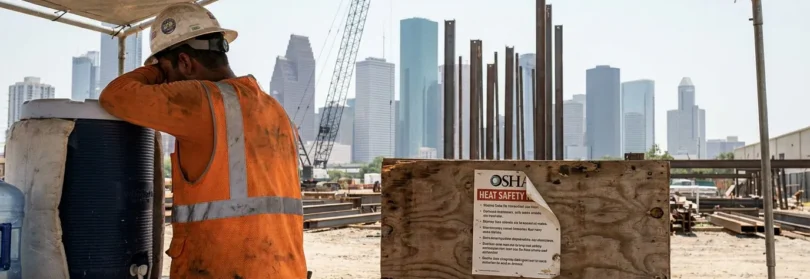
Key Takeaways: OSHA’s Heat National Emphasis Program targets both outdoor and indoor heat hazards on Houston construction sites, increasing inspections and employer accountability. Texas leads the nation in work-related heat deaths, with 42 fatalities between 2011 and 2021. Houston construction workers who suffer heat stroke, heat exhaustion, or rhabdomyolysis may have legal options under both workers’ compensation and third-party claims. Texas law requires employers to maintain a reasonably safe workplace, reinforcing OSHA’s federal mandates. Strict filing deadlines apply to heat-injury claims, and missing them can eliminate a worker’s right to benefits.
As Houston enters another brutal summer, OSHA’s updated Heat National Emphasis Program is placing construction job sites under heightened federal scrutiny. The program, titled "National Emphasis Program, Outdoor and Indoor Heat-Related Hazards" under directive CPL 03-00-024, was issued in April 2022 and reissued on April 10, 2026, directing enforcement resources toward conditions that injure and kill Texas construction workers. For workers pouring concrete in the Galleria area, framing structures along the Ship Channel, or laying pipe in the Energy Corridor, this program has consequences for both employers and injured workers seeking accountability.
The Scope of Heat Deaths and Injuries on Texas Construction Sites
The numbers paint a grim picture of heat-related danger in the Texas construction industry. Between 2011 and 2021, Texas recorded at least 42 work-related heat deaths, more than any other state according to the U.S. Bureau of Labor Statistics. Nationally, from 2011 to 2019, the Bureau reported 344 deaths due to environmental heat exposure, with 43 deaths in 2019 alone.
These are not abstract statistics for Houston construction crews. Houston’s combination of extreme heat, high humidity, and demanding outdoor work creates conditions where heat stroke can develop in minutes. When a worker collapses from heat stroke, consequences often include permanent organ damage, chronic kidney disease, cognitive impairment, lost earning capacity, and devastating financial strain on families. For workers and families facing these outcomes, understanding the Texas workplace safety laws that govern employer obligations is critical.
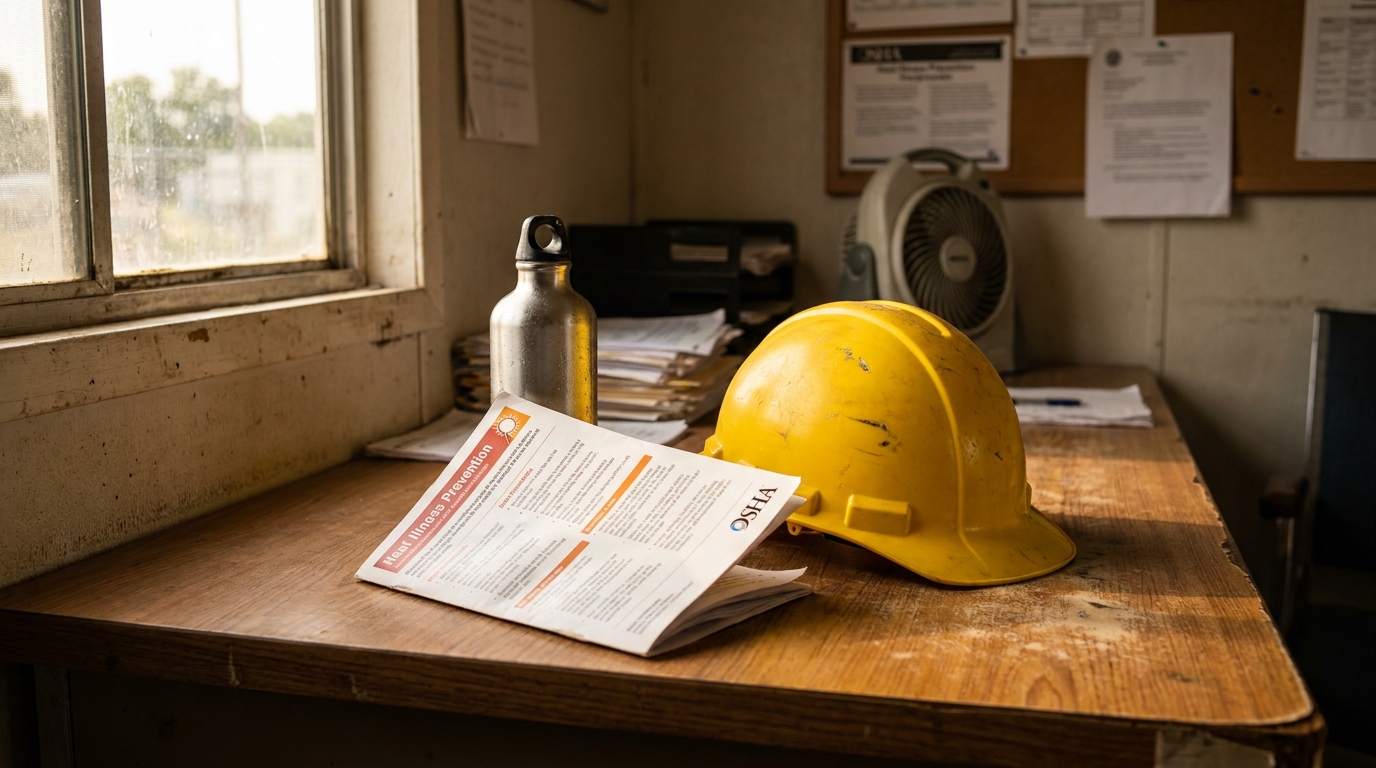
How OSHA’s Heat NEP Changes Enforcement on Houston Job Sites
What the Program Covers
OSHA’s National Emphasis Programs concentrate enforcement resources on particular hazards and high-hazard industries. The Heat NEP covers both outdoor and indoor heat-related hazards, applying to open-air construction sites, warehouses, manufacturing floors, and enclosed work environments throughout Houston. This broad scope reflects that heat illness affects workers regardless of whether they’re under the sun or inside poorly ventilated buildings.
How OSHA Evaluates and Enforces the Program
OSHA evaluates emphasis programs using inspection data, injury and illness data, NIOSH reports, and peer-reviewed literature. The agency actively tracks heat injury trends on Houston job sites and uses that data to prioritize inspections. When OSHA identifies patterns of heat-related violations or injuries, affected employers, general contractors, and project owners face potential citations and penalties.
OSHA’s "Water. Rest. Shade." campaign encourages employers to provide frequent breaks and cool shelter as temperatures rise. The Heat NEP goes further, giving OSHA inspectors directive to initiate both programmed and unprogrammed inspections based on heat conditions, worker complaints, or injury reports. For Houston construction workers, an employer’s failure to provide adequate water, rest breaks, or shaded areas can trigger a federal investigation, generating documentation that may support a personal injury or wrongful death claim.
When a Houston Worker Suffers Heat Stroke on the Job: A Closer Look
A Scenario Too Common in Houston Construction
Consider a laborer working for a subcontractor on a high-rise project in downtown Houston during July. Temperatures regularly exceed 100 degrees, with heat index values climbing higher due to humidity and radiant heat from concrete and steel. The general contractor has not provided shaded rest areas. Water coolers are empty by mid-morning, and the foreman discourages breaks because the project is behind schedule.
By early afternoon, the laborer shows signs of heat exhaustion: confusion, nausea, and dangerously elevated body temperature. Coworkers call 911. At the hospital, doctors diagnose exertional heat stroke with early signs of rhabdomyolysis, where muscle tissue breaks down and releases proteins that can cause kidney failure. The worker faces weeks in the hospital, months of rehabilitation, and possible permanent kidney damage that ends his ability to perform physical labor.
This is a life-altering injury caused by identifiable failures: no shade structures, insufficient water, and a culture that penalizes rest. The general contractor, subcontractor, and potentially the project owner may each bear responsibility. In such cases, injured workers and families often benefit from pursuing both workers’ compensation benefits and third-party negligence claims. An experienced houston construction accident lawyer can evaluate which parties may be liable and what compensation may be available.
Dual Liability: Federal OSHA Standards and Texas State Law
Houston construction employers face potential liability under both federal and state law when workers suffer heat illness. Under Texas Labor Code Section 411.103, Texas law imposes a statutory duty on employers to provide and maintain a reasonably safe workplace, including safeguards necessary to protect employee life and health; the Division of Workers’ Compensation enforces workplace safety. This statutory duty reinforces OSHA’s General Duty Clause under Section 5(a)(1) of the OSH Act.
Texas law requires certain safety training for workers exposed to hazardous conditions. Under the Texas Hazard Communication Act (Texas Health and Safety Code Chapter 502), employers must provide education and training programs related to chemical hazards and supply additional instruction when exposure conditions change. Texas employers have a common-law and regulatory obligation to train workers on recognized hazards, which on Houston job sites during peak summer may extend to heat illness recognition and prevention.
Texas’s Division of Workers’ Compensation collects occupational injury and illness data, including nature, source, and cause, through a cooperative agreement with the federal Bureau of Labor Statistics, but this data is based on a stratified random sample of employers rather than a comprehensive record of every reported workplace injury, and significant gaps exist because Texas does not require most private employers to carry workers’ compensation insurance. This data supports statistical analysis of heat illness trends and can inform both enforcement priorities and litigation strategy. Heat is tracked as a serious hazard on Houston job sites under OSHA’s Heat National Emphasis Program, separate from OSHA’s Fatal Four construction hazards, falls, struck-by incidents, caught-in/between incidents, and electrocutions, as described in OSHA’s Fatal Four.
Filing Deadlines and Workers’ Compensation for Heat Injuries
Time is one of the most critical factors in a heat-injury claim. A Houston construction worker who suffers a heat-related injury must report the injury to the employer within 30 days and file a workers’ compensation claim with the Texas Division of Workers’ Compensation no later than one year after the injury date. For occupational diseases developing gradually, such as chronic heat-related kidney disease, the one-year clock generally begins when the worker knew or should have known the condition was work-related. Missing these deadlines can bar the worker from recovering benefits entirely.
Key steps for protecting a potential claim include:
- Reporting the injury to the employer as soon as possible, preferably in writing, within 30 days
- Seeking immediate medical attention and documenting all diagnoses and treatment
- Filing a workers’ compensation claim within the statutory one-year deadline
- Preserving evidence such as job site photographs, witness names, and communications with supervisors about heat safety
- Consulting with legal counsel about whether a third-party claim may be available
Workers should understand that the workers’ compensation process and a potential third-party lawsuit are separate legal avenues. Workers’ compensation generally provides medical benefits and partial wage replacement regardless of fault, while a third-party claim can pursue full damages, including lost future earning capacity, pain and suffering, and long-term medical care costs. In catastrophic heat injury cases involving permanent organ damage or death, pursuing both tracks may be essential to securing meaningful financial recovery.
How Does This Impact Me?
Can I file a claim if my employer did not provide water or shade on a Houston construction site?
In many cases, yes. If your employer failed to provide adequate water, rest, or shade and you suffered a heat-related injury, you may have grounds for a workers’ compensation claim and potentially a third-party negligence claim. OSHA’s Heat NEP establishes these are recognized workplace hazards, and Texas law independently requires employers to maintain safe work environments. The strength of your claim depends on specific facts, including injury severity and employer conduct.
Does OSHA’s Heat Emphasis Program give me additional legal rights?
OSHA’s Heat NEP does not create a private right of action, meaning you cannot sue an employer directly under the NEP or OSH Act. However, OSHA citations and inspection findings can serve as powerful evidence in a negligence or wrongful death lawsuit. An employer cited for heat-safety violations may face difficulty arguing it met its legal duty to protect workers.
What is the deadline to file a heat injury claim in Texas?
Under Texas Labor Code § 409.003, you generally must file a workers’ compensation claim within one year of the injury date. You must also report the injury to your employer within 30 days under § 409.001. If the condition developed over time, such as chronic kidney disease from repeated heat exposure, the deadline may begin when you knew or should have known the condition was work-related. Courts interpret these exceptions narrowly, so acting promptly is important.
What if multiple companies are responsible for unsafe conditions on my job site?
Construction projects often involve general contractors, subcontractors, project owners, and equipment suppliers, any of whom may share responsibility for unsafe heat conditions. Identifying all potentially liable parties is critical in catastrophic injury cases because it broadens potential recovery sources. A thorough investigation may reveal the general contractor controlled site safety protocols, the subcontractor failed to train workers, or a staffing agency neglected to screen for heat vulnerability.
Should I still pursue a claim if I signed a waiver or was told I assumed the risk?
Waivers and assumption-of-risk defenses are not absolute in Texas construction injury cases. Under certain circumstances, courts may find that an employer cannot contract away its statutory duty to provide a safe workplace. This is fact-intensive, and workers with serious heat injuries should not assume a signed document eliminates their legal options.
Protecting Your Rights After a Heat Injury on a Houston Job Site
OSHA’s continued enforcement of the Heat National Emphasis Program signals that federal regulators recognize the severity of heat-related hazards on construction sites, particularly in heat-intensive regions like Houston. Texas state law reinforces these protections by requiring safe workplaces, documented training, and comprehensive injury reporting. For construction workers who have suffered heat stroke, rhabdomyolysis, or other serious heat-related conditions, both workers’ compensation and third-party claims may be available, but strict deadlines and complex liability questions demand prompt action.
If you or a family member has suffered a serious heat-related injury on a Houston construction site, the legal team at Fibich, Leebron, Copeland & Briggs is prepared to evaluate your situation. With a proven track record in high-stakes construction injury cases, the firm focuses on holding negligent employers, contractors, and project owners accountable. Call 713-751-0025 or contact us today to discuss your case before critical deadlines pass.