
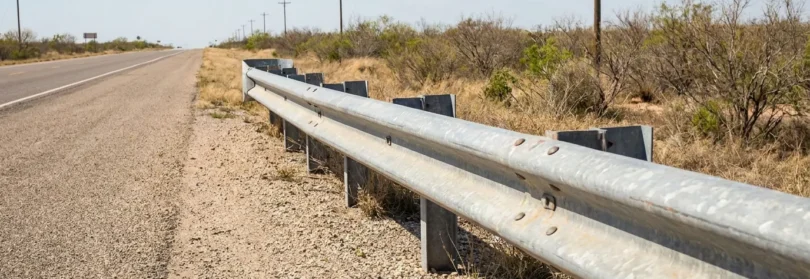
When a Highway Guardrail Becomes a Spear: What Texas Crash Victims Need to Know
Key Takeaways: An X-LITE end terminal should telescope and absorb crash energy, but when it fails it can spear through a vehicle causing catastrophic injuries. Texas victims should: preserve the guardrail hardware and wrecked vehicle before replacement or salvage, document the scene and installation details, obtain prompt medical care, identify all potentially responsible parties, and confirm filing deadlines. Personal injury suits in Texas generally require filing within two years under Tex. Civ. Prac. & Rem. Code § 16.003(a), while products claims may implicate the 15-year repose period in § 16.012. Claims against governmental entities add Texas Tort Claims Act immunity limits and a six-month notice requirement. These cases frequently turn on evidence gathered in the first weeks.
An X-LITE guardrail end terminal is supposed to absorb crash energy and telescope backward. When that system fails, the rail can spear through the vehicle and the people inside. If you or a family member survived an impalement crash in Texas, five critical steps are preserving evidence, documenting the scene, getting medical care, identifying responsible parties, and confirming your filing deadline.
If your family is facing permanent disability, extended hospitalization, or the loss of a loved one after a suspected guardrail failure, Fibich, Leebron, Copeland & Briggs is prepared to investigate and litigate these claims. Call 713-751-0025 or contact our Houston trial team to discuss what happened.

Step One: Preserve the Guardrail Hardware and the Vehicle
One of the most valuable pieces of evidence is often destroyed within days of the crash. Damaged terminals are frequently removed by maintenance crews, and wrecked vehicles are salvaged, crushed, or repaired before inspection. Once the rail sections, impact head, posts, and anchor cable are gone, proving how the system behaved becomes substantially harder.
Preservation requires prompt written notice to parties controlling the evidence: the vehicle’s insurer, the salvage yard, the contractor, and the manufacturer. Counsel experienced in these matters typically sends spoliation letters and arranges independent inspection before anything is altered. Our guide on how to preserve evidence after a guardrail crash walks through this process in detail.
💡 Pro Tip: Photograph the terminal head, serial markings on the hardware, and post spacing before repairs occur. Those markings may help identify the production run and installation specifications later.
Step Two: Document the Scene, the Roadway, and the Installation
Guardrail cases are not just product cases; they may also be installation and maintenance cases. An end terminal installed at the wrong height, on an improper slope, with incorrect post embedment, or without the required anchor configuration may fail even if the design is sound.
A post-crash documentation checklist includes:
- Wide and close-range photographs of the terminal, rail, posts, and vehicle intrusion
- The crash report number and responding agencies
- Contact information for all witnesses
- Any dashcam, traffic camera, or surveillance footage
- Records of prior crashes or repairs at that location
Step Three: Get Immediate and Continuous Medical Care
Impalement injuries are rarely straightforward, and the medical record often becomes the backbone of the damages case. Penetrating trauma, degloving injuries, traumatic amputation, spinal cord damage, and traumatic brain injury frequently require multiple surgeries, months of rehabilitation, and lifelong care. Gaps in treatment may give defense counsel room to argue injuries were less severe than claimed.
Future medical care and lost earning capacity can drive value more than immediate bills. Life care planning, vocational assessment, and economic analysis are typically needed to quantify what permanent disability may cost across decades. Under Texas law, a product liability action is defined broadly by Tex. Civ. Prac. & Rem. Code § 82.001(2) to include any action against a manufacturer or seller for recovery of damages arising from personal injury, death, or property damage allegedly caused by a defective product.
Step Four: Identify Every Party Behind an X-LITE Guardrail End Terminal Failure
Rarely does a single defendant explain a serious guardrail impalement. Liability may extend to the manufacturer, distributor, installer, and maintenance entities. Texas limits when a nonmanufacturing seller can be held liable under Tex. Civ. Prac. & Rem. Code § 82.003, which lists exceptions such as alteration, independent knowledge of the defect, or an unavailable manufacturer.
Product Defect Theories Commonly Examined
Texas product liability analysis often turns on whether a product was unreasonably dangerous. In design defect claims, Tex. Civ. Prac. & Rem. Code § 82.005(a) requires proof that a safer alternative design existed and that the defect was a producing cause of injury, with "safer alternative design" defined by § 82.005(b) as one that was economically and technologically feasible and would have prevented or significantly reduced the risk without substantially impairing utility. Section 82.008 provides a rebuttable presumption of non-liability where the product complied with mandatory federal safety standards.
Claims Involving Government Entities
When a governmental unit installed or maintained the guardrail, separate rules apply. Claims against state, county, or municipal transportation entities generally proceed under the Texas Tort Claims Act, Tex. Civ. Prac. & Rem. Code Chapter 101, which waives immunity only in limited circumstances and caps damages. Section 101.101 requires notice within six months of the incident; that notice period runs independently of the two-year lawsuit deadline. The Act preserves immunity for discretionary design decisions under § 101.056.
Comparative Responsibility Considerations
Defendants often argue that the driver caused the departure from the roadway. Texas applies the proportionate responsibility framework in Tex. Civ. Prac. & Rem. Code Chapter 33, under which a claimant’s recovery is reduced by his or her percentage of responsibility and barred entirely if that percentage exceeds 50 percent.
Step Five: Confirm the Deadline That Applies to Your Claim
Texas filing deadlines are set by statute, and missing the period may bar the claim entirely. As TexasLawHelp explains, the statutes of limitations in Texas civil lawsuits are provided by Texas Civil Practice and Remedies Code Chapter 16. Personal injury claims generally fall under § 16.003(a), which requires suit within two years after the cause of action accrues.
The two-year rule is not absolute. Tolling may apply for legal disability under § 16.001 for minors and persons of unsound mind, and absence from the state under § 16.063.
| Issue | General Framework |
|---|---|
| Personal injury | Tex. Civ. Prac. & Rem. Code § 16.003(a): generally two years from accrual |
| Wrongful death | Tex. Civ. Prac. & Rem. Code § 16.003(b): accrues on death |
| Products repose | Tex. Civ. Prac. & Rem. Code § 16.012(b): generally 15 years from sale |
| Government claims | Tex. Civ. Prac. & Rem. Code § 101.101: notice within six months |
How Statutes of Repose Differ
A statute of repose may bar a product claim a set number of years after sale, regardless of when injury occurs. Texas Civil Practice and Remedies Code § 16.012(b) generally requires a products liability action within 15 years after the date of sale. That period is subject to exceptions, including § 16.012(c), which provides that if a manufacturer or seller expressly warrants in writing that a product has a useful safe life of longer than 15 years, the claimant must file suit before the end of the warranted period, and § 16.012(d-1), which provides that the 15-year repose period does not reduce the limitations period for latent disease or exposure claims described in § 16.012(d) that accrue before the repose period expires.
Wrongful Death and Derivative Claims
If a guardrail impalement proves fatal, surviving family members may pursue claims. Under Tex. Civ. Prac. & Rem. Code § 16.003(b), suit for injury resulting in death must be brought within two years after the cause of action accrues. The Texas Wrongful Death Act, Tex. Civ. Prac. & Rem. Code § 71.004, limits claims to the surviving spouse, children, and parents, while a separate survival claim under § 71.021 belongs to the estate for harms the decedent suffered before death.
Why These Cases Demand Trial-Ready Representation
Guardrail end terminal litigation is often fought against well-funded corporate defendants and their retained engineers. Building these claims may require accident reconstruction, metallurgical and crashworthiness analysis, review of federal crash-test acceptance history, and testimony connecting the hardware’s performance to specific injuries.
Families often tell us they were pressured to give a recorded statement or accept an early offer before anyone inspected the guardrail. A x-lite guardrail end terminal failure lawyer can take those conversations over so you can focus on recovery.
💡 Pro Tip: Ask your hospital for the complete imaging set, not just the radiology reports. Scans showing the intrusion path may be critical.
Frequently Asked Questions
1. How long do I have to file a Texas guardrail injury lawsuit?
Personal injury claims are generally governed by Tex. Civ. Prac. & Rem. Code § 16.003(a), requiring suit within two years of accrual. Products claims may also be subject to the 15-year repose period in § 16.012, and claims against governmental units require notice within six months under § 101.101.
2. Does the clock start on the crash date or later?
Often the crash date, but not always. The discovery rule may defer accrual in narrow situations, tolling may apply for minors and persons under legal disability, and in death cases the cause of action generally accrues on the date of death.
3. Who can be held responsible for a guardrail impalement?
Potential defendants include the manufacturer, designer, distributor, installer, and maintenance entities, though a nonmanufacturing seller is liable only if one of the exceptions in § 82.003 applies. Claims involving governmental entities raise separate immunity, damages cap, and six-month notice issues.
4. What if the guardrail was already replaced after my crash?
The case may be harder, not necessarily impossible. Maintenance records, repair invoices, inspection reports, scene photographs, and the vehicle itself may still support engineering analysis. Move quickly to preserve whatever remains.
5. What damages are typically pursued in these cases?
Recoverable damages may include past and future medical care, lost wages and diminished earning capacity, physical impairment, disfigurement, and pain and suffering. Exemplary damages require clear and convincing proof of fraud, malice, or gross negligence and are capped by Tex. Civ. Prac. & Rem. Code § 41.008. In fatal cases, statutory beneficiaries under § 71.004 may pursue wrongful death damages while the estate may pursue survival damages.
Protecting Your Family’s Future After a Catastrophic Guardrail Crash
An impalement injury can permanently change a family’s financial and physical future. The legal path forward may depend on evidence that disappears quickly and deadlines that do not forgive delay. Preserving the hardware and vehicle, documenting the installation, maintaining medical care, identifying all responsible parties, and confirming applicable deadlines are steps that may give a serious claim its strength.
If a suspected guardrail end terminal failure left your family facing permanent disability, mounting medical costs, or a devastating loss, the trial attorneys at Fibich, Leebron, Copeland & Briggs are ready to evaluate what happened. Call 713-751-0025 or request a case review today.
Disclaimer: This content is for informational purposes only and is not legal advice. Every case is unique, and results may vary. Consult an attorney about your specific circumstances.