
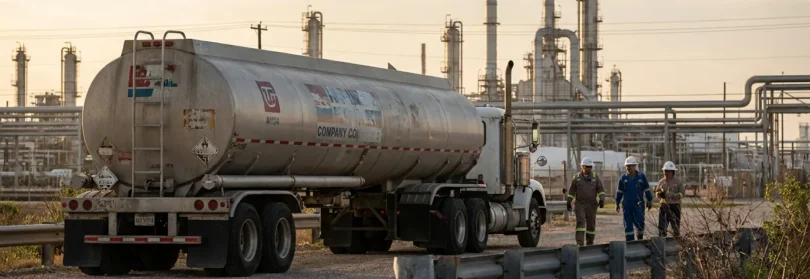
Understanding Your Legal Options After a Catastrophic Refinery Explosion in Houston
Key Takeaways: Yes, a truck driver injured in a Houston refinery blast can file a third-party claim while receiving workers’ compensation benefits, because Texas law’s exclusive remedy bar applies only to the employer, not to negligent outside parties. Under Texas Labor Code § 417.001(a), an injured driver may pursue no-fault workers’ comp and a civil negligence suit against the refinery operator, equipment manufacturer, or contractor simultaneously. This dual-track approach is critical because workers’ comp alone rarely makes a catastrophically injured driver whole. A successful third-party recovery may trigger the carrier’s subrogation right to repayment, but that lien is capped and reduced by the employer’s share of fault. Most claims must be filed within Texas’s strict two-year deadline, so preserving evidence and acting quickly are essential.
Yes, a truck driver injured in a Houston refinery blast can generally file a third-party claim, and doing so may be one of the most important decisions of their recovery. Houston’s industrial corridor contains one of the nation’s densest concentrations of refineries, and commercial drivers hauling fuel, equipment, and hazardous materials face extraordinary risk. When a refinery explosion causes catastrophic burns, traumatic brain injury, or wrongful death, Texas law allows an injured driver to pursue workers’ compensation benefits while simultaneously holding a negligent refinery operator or equipment manufacturer accountable in civil court.
📞 If you or a loved one suffered life-altering injuries in a refinery blast, the trial-ready team at Fibich, Leebron, Copeland & Briggs is prepared to investigate aggressively. Call us at 713-751-0025 or reach out through our contact page to discuss your rights today.
Why Workers’ Compensation Alone Rarely Covers a Catastrophic Injury
Workers’ compensation provides a critical safety net, but it was never designed to make a catastrophically injured truck driver whole. Under Texas law, a driver hurt while performing work duties is entitled to benefits regardless of fault. An insurance carrier is liable for compensation for an employee’s injury without regard to fault if the injury arises out of and in the course and scope of employment, as set out in Texas Labor Code § 406.031(a).
That no-fault structure is valuable, but it comes with a significant trade-off. Recovery of workers’ compensation benefits is the exclusive remedy of an employee covered by workers’ compensation insurance coverage against the employer or an agent or employee of the employer for a work-related injury under Texas Labor Code § 408.001.
The exclusive remedy bar, however, applies only to the employer, not to outside parties. That distinction is the legal gateway to a third-party claim. One notable exception exists: if the employer’s gross negligence or intentional act results in the death of an employee, the surviving spouse or heirs may still pursue exemplary damages outside the workers’ comp system under Texas Labor Code § 408.001(b).
💡 Pro Tip: Keep every benefit statement, medical bill, and lost-wage record from your workers’ comp claim. These documents become essential when calculating how a third-party recovery interacts with benefits already received.
The Two-Track System That Lets You Pursue Full Recovery
Texas law expressly permits an injured driver to pursue both tracks at once. An employee or legal beneficiary may seek damages from a third party who is liable to pay damages for an injury that is compensable under the subtitle and may also pursue a claim for workers’ compensation benefits, as stated in Texas Labor Code § 417.001(a).
A third-party claim targets a culpable party separate from your employer. Third-party liability refers to bodily injury caused by a negligent or reckless third party’s actions or omissions. In the refinery context, that third party is often the plant operator, an equipment manufacturer, or an independent contractor whose failures triggered the blast. You can review the full framework in the Texas Labor Code provisions on third-party actions and subrogation.
Identifying the responsible parties early is critical in complex industrial cases. A refinery explosion frequently involves layered corporate liability, where multiple defendants share responsibility. The same investigative approach our firm applies to third party claim refinery Houston cases helps uncover deferred maintenance, ignored safety protocols, and defective equipment.
How a Houston Refinery Explosion Lawyer Builds the Liability Case
Building liability against a refinery generally turns on proving negligence, causation, and damages. A commercial truck driver who enters a refinery to make a lawful delivery is treated as an invitee under Texas common-law premises liability. Owners owe invitees the highest duty of care, which includes using ordinary care to reduce or eliminate unreasonable risks and to inspect, make safe, or warn of dangerous conditions the owner knew about or should have discovered through reasonable inspection.
The potential for exemplary damages is especially powerful in industrial accident litigation. A refinery operator who knowingly ignored safety protocols, deferred critical maintenance, or violated industry standards could be exposed to liability for ordinary negligence and, where conduct rises to gross negligence, malice, or fraud, to exemplary damages. Under Texas Civil Practice and Remedies Code § 41.003, exemplary damages must be established by clear and convincing evidence.
A refinery cannot quietly shift its financial responsibility back onto your employer after the fact. The employer is not liable to the third party for reimbursement or damages based on the judgment or settlement unless the employer executed, before the injury or death occurred, a written agreement with the third party to assume the liability, under Texas Labor Code § 417.004.
💡 Pro Tip: Evidence disappears fast after an industrial explosion. Photographs, surveillance footage, maintenance logs, and equipment records should be preserved immediately, because refineries often begin cleanup within days.
Untangling Subrogation: Who Gets Paid First
When a driver wins a third-party recovery, the workers’ comp carrier generally has a right to be repaid. When an employee claims workers’ comp benefits, the insurance carrier is subrogated to the rights of the injured employee and may enforce the liability of the third party under Texas Labor Code § 417.001(b).
The carrier’s recovery is capped and reduced by the employer’s share of fault. The insurance carrier’s subrogation interest is limited to the amount of total benefits paid or assumed by the carrier to the employee or the legal beneficiary, less the amount by which the court reduces the judgment based on the percentage of responsibility determined by the trier of fact under Civil Practice and Remedies Code § 33.003, attributable to the employer under § 417.001(b).
| Order of Recovery | Who Receives It | Governing Provision |
|---|---|---|
| First | Carrier reimburses itself and pays costs (combined) | Labor Code § 417.001(b)(1) |
| Second | Remainder to injured driver or beneficiary | Labor Code § 417.001(b)(2) |
| Future benefits | Surplus treated as advance against future comp | Labor Code § 417.002(a)-(c) |
When the recovery exceeds the carrier’s subrogation interest, the carrier reimburses itself and pays costs from the amount recovered as a combined step under § 417.001(b)(1); subsection (2) then directs the remainder to the injured employee or legal beneficiary. When the employee brings the third-party action and the carrier intervenes, the net amount recovered by a claimant is first used to reimburse the carrier for past benefits paid, and any surplus beyond that reimbursement is treated as an advance against future workers’ compensation benefits under Texas Labor Code § 417.002; if that advance covers all future benefits, the carrier is not required to resume payments.
💡 Pro Tip: Negotiating the carrier’s subrogation lien is often key to maximizing your net recovery. A careful calculation of future benefits against settlement value can meaningfully change how much money reaches your family.
The Deadline That Can End Your Case Before It Begins
Texas imposes a strict two-year deadline on most personal injury lawsuits. Under Texas Civil Practice and Remedies Code Section 16.003, a person must bring suit for personal injury not later than two years after the day the cause of action accrues. The same clock generally applies to wrongful death claims.
This deadline cannot be contracted away to a shorter period for suits on the stipulation, contract, or agreement except in the limited exception set out by statute. Under Texas Civil Practice and Remedies Code § 16.070(a), except as provided by Subsection (b), a person may not enter a stipulation, contract, or agreement that purports to limit the time in which to bring suit on the stipulation, contract, or agreement to a period shorter than two years; Subsection (b) provides an exception for agreements relating to the sale or purchase of a business entity where the consideration is at least $500,000. You can review the controlling limitations statute on the Texas two-year limitations period for the precise text.
While narrow exceptions and tolling doctrines exist, courts generally interpret them strictly. Tolling and discovery rules may apply in limited circumstances, but they are not automatic. Drivers and families should treat the two-year window as a firm boundary and act well before it closes.
Important early steps include:
- Seek immediate medical documentation of all injuries
- Report the injury to your employer and the comp carrier promptly
- Preserve physical evidence, photos, and witness contact information
- Consult counsel before giving recorded statements to any insurer
Frequently Asked Questions
1. Can I sue the refinery if I am already receiving workers’ comp?
Yes, in most cases. Texas Labor Code § 417.001(a) permits you to pursue workers’ comp benefits and a third-party lawsuit against the refinery simultaneously. The exclusive remedy bar applies only to your employer, not outside parties.
2. What if the refinery blames my trucking employer for the explosion?
The employer’s fault percentage may reduce the carrier’s subrogation interest, not your right to recover. Under § 417.001(b) and § 33.003, the trier of fact assigns responsibility, and the carrier’s lien shrinks by the employer’s share.
3. How long do I have to file a third-party claim in Texas?
Generally two years from the date of injury, or the date of death in wrongful death cases. Texas Civil Practice and Remedies Code § 16.003 sets this deadline, and exceptions are interpreted narrowly.
4. Who can be held liable besides the refinery operator?
Liability often extends to multiple parties. Equipment manufacturers, maintenance contractors, and other on-site companies may share responsibility. A thorough investigation by a houston industrial accident lawyer can identify every potentially culpable defendant.
5. Does my recovery have to repay the workers’ comp carrier?
Often, yes, but only up to the statutory limit. The net amount recovered by a claimant in a third-party action is first used to reimburse the insurance carrier for past benefits paid; any amount exceeding that reimbursement is treated as an advance against future benefits under Labor Code § 417.002.
Protecting Your Future After a Devastating Industrial Blast
A refinery explosion can permanently alter a truck driver’s ability to work, support a family, and live without pain. Texas law provides a framework that lets injured drivers combine no-fault workers’ comp benefits with a full third-party negligence claim against the parties truly responsible. When corporate negligence, deferred maintenance, or defective equipment fuels a catastrophic blast, the law allows accountability that reaches beyond limited benefits. Experienced counsel and aggressive investigation are essential to protecting your right to future medical care and lost earnings. Drivers and families should also understand how a dedicated houston truck accident attorney approaches these complex industrial cases.
📞 If a Houston refinery blast has upended your life, do not wait while the deadline runs and evidence disappears. Speak with a trusted houston refinery explosion lawyer at Fibich, Leebron, Copeland & Briggs by calling 713-751-0025 or requesting your confidential consultation online today.