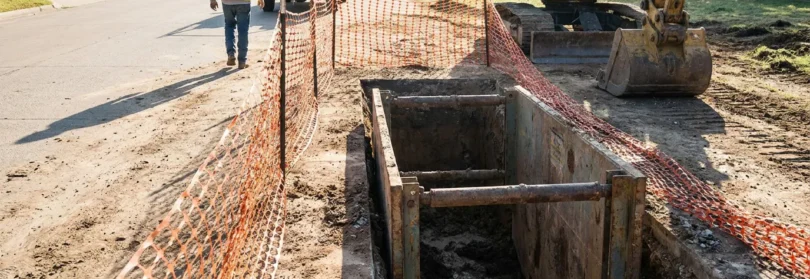
When a Trench Collapse Takes a Life: Understanding Texas Filing Deadlines
Key Takeaways: In most cases, Texas families have two years from the date of death to file a wrongful death lawsuit after a trench collapse, under Texas Civil Practice and Remedies Code § 16.003(b). Some deadlines are shorter. Workers’ compensation death benefits claims generally must be filed within one year of the worker’s death, with limited good-cause exceptions. Claims against government entities may require written notice within six months or less. If the employer carried workers’ compensation, those benefits are usually the only remedy against that employer, except that a surviving spouse or the worker’s heirs of the body may seek exemplary damages for gross negligence or an intentional act or omission. Families may be able to sue nonsubscribing employers directly, and may bring third-party claims against contractors, property owners, or equipment makers, generally within two years. Evidence at a collapse site can disappear quickly, so acting early can help protect the family’s ability to hold every responsible party accountable.
In most cases, Texas families have two years from the date of death to file a wrongful death lawsuit after a trench collapse death. That deadline comes from Texas Civil Practice and Remedies Code § 16.003(b), and it generally applies to wrongful death claims created by Chapter 71 of the same code. Other deadlines can be much shorter. Workers’ compensation death benefits claims generally must be filed within one year, and evidence at a collapsed trench site can disappear within days.
If your family lost a provider in a trench or excavation collapse and you believe a contractor, property owner, or equipment maker failed to protect your loved one, Fibich, Leebron, Copeland & Briggs is ready to review what happened with you. Call 713-751-0025 or contact our Houston trial team today to discuss your family’s options before key deadlines close.

Why Trench Collapses Are So Often Fatal
A trench wall can bury a worker under thousands of pounds of soil in seconds, leaving little chance of survival. Workers caught in a full collapse often die from crushing injuries or suffocation before rescuers arrive. For the families left behind, household income ends suddenly.
Federal regulators treat these deaths as a growing national problem. The U.S. Department of Labor announced stronger enforcement after an alarming rise in trench fatalities. In Houston, where pipeline, utility, and road work goes on year-round, these risks are present every day.
Safety Standards That May Matter in a Lawsuit
Trench deaths are often preventable, because accepted engineering practices exist to help stop cave-ins. Federal OSHA excavation standards (29 C.F.R. Part 1926, Subpart P) generally require protective systems such as sloping, shoring, or trench boxes for trenches 5 feet deep or more, unless the excavation is made entirely in stable rock. When a contractor skips these protections, that failure may help show it broke required safety practices. Whether a specific lapse proves negligence depends on the facts.
The Two-Year Filing Deadline for a Trench Collapse Death
Under Texas Civil Practice and Remedies Code § 16.003(b), a wrongful death lawsuit generally must be filed within two years of the date of death. This period applies to the claim created by the Texas Wrongful Death Act in Chapter 71. If a family files late, the defendant can raise it as a defense, and the claim may be barred no matter how strong the evidence is.
Exceptions exist, but courts read them narrowly. The deadline may pause in limited cases, such as when a claimant is a minor or of unsound mind. Other rules can shorten the real deadline. For example, claims against government entities under the Texas Tort Claims Act generally require written notice within six months of the incident, and some cities require notice sooner.
Who May Bring the Claim
Texas Civil Practice and Remedies Code § 71.004 limits wrongful death recovery to the surviving spouse, children, and parents of the deceased, including adopted children and adoptive parents. These family members may bring the claim alone or together, for the benefit of all. If none files within three months of the death, the estate’s executor or administrator may bring the claim unless all of them ask that no action be filed. In trench cases, defendants are often general contractors, subcontractors, and corporate site owners.
💡 Pro Tip: Even if two years sounds like plenty of time, finding every responsible company on a multi-contractor job site can take months. Starting early protects your ability to name all liable parties.
Workers’ Compensation Deadlines and Rules Families Should Know
If the employer carried workers’ compensation insurance, those benefits are generally the family’s only remedy against that employer. Texas Labor Code § 408.001(a) generally makes workers’ compensation the exclusive remedy against a covered employer or its agents and employees for a work-related death.
The One-Year Deadline for Parents
When no eligible spouse, child, or grandchild survives, eligible parents may claim death benefits, but they generally must file within one year of the worker’s death. Texas Labor Code § 408.182(d-2) requires a parent to file by the first anniversary of the death. More broadly, Texas Labor Code § 409.007 generally requires any death benefits claim to be filed with the Division of Workers’ Compensation within one year, and missing this deadline generally bars the claim unless good cause exists.
How Death Benefits Are Divided
Workers’ compensation death benefits are generally paid to eligible family members in a set order. Under Texas Labor Code § 408.182(a)-(c), when both an eligible spouse and eligible children survive, the spouse generally receives half and the children share the other half equally. When only one group survives, it generally receives all of the benefits.
The Gross Negligence Exception
Even when the employer has coverage, the surviving spouse or the worker’s heirs of the body, such as biological children, may still seek exemplary damages in some cases. Texas Labor Code § 408.001(b)-(c) preserves these claims when the death resulted from the employer’s intentional act or omission or from gross negligence, as defined in Texas Civil Practice and Remedies Code § 41.001. Parents cannot bring this claim. Ignoring known cave-in hazards might support a gross negligence claim, but the family must meet a clear-and-convincing evidence standard.
When the Employer Had No Workers’ Comp Coverage
Texas does not require most private employers to carry workers’ compensation, and that choice can carry real consequences. Under Texas Labor Code § 406.033, a family may be able to sue a nonsubscribing employer directly. That employer generally cannot defend by claiming the worker was partly at fault, accepted the risk, or was hurt by a co-worker’s negligence.
The family still must prove the employer or its agent was negligent, as required by Section 406.033(d). Section 406.033(c) generally allows the employer to defend only by showing that the worker meant to cause the injury or was intoxicated. The two-year deadline generally governs these lawsuits as well.
Third-Party Claims: Holding Every Responsible Company Accountable
Families can generally pursue workers’ compensation benefits and also sue a liable third party. Texas Labor Code § 417.001(a) allows a legal beneficiary to seek damages from someone other than the employer while also claiming benefits. However, a general contractor or owner that provided workers’ compensation coverage to subcontractors’ workers may be treated as a statutory employer and shielded by the exclusive remedy rule. On a trench project, liable third parties may include:
- A general contractor that controlled site safety
- Another subcontractor whose work weakened the trench walls
- A property owner who knew of hazardous soil conditions
- A maker of defective shoring or trench box equipment
These claims may be worth more because they may cover lost earning capacity, loss of companionship, mental anguish, and other losses that workers’ comp benefits do not. Under Texas Labor Code § 417.001(b), the carrier generally has a right to recover benefits it paid, but that amount may be reduced by the employer’s percentage of responsibility. Claims against a property owner over a contractor’s work may also be limited by Chapter 95 of the Civil Practice and Remedies Code, which generally requires proof that the owner had control and actual knowledge of the danger. For a closer look at how investigations unfold, read our analysis of the OSHA probe after a Conroe collapse.
| Claim Type | Typical Deadline | Key Statute |
|---|---|---|
| Wrongful death lawsuit | Two years from death | Tex. Civ. Prac. & Rem. Code § 16.003(b) |
| Parent’s workers’ comp death claim | One year from death | Tex. Lab. Code §§ 408.182(d-2), 409.007 |
| Nonsubscriber lawsuit | Generally two years | Tex. Lab. Code § 406.033; Tex. Civ. Prac. & Rem. Code § 16.003 |
| Third-party claim | Generally two years | Tex. Lab. Code § 417.001; Tex. Civ. Prac. & Rem. Code § 16.003 |
💡 Pro Tip: Request copies of any OSHA inspection records, site safety plans, and daily logs as early as possible. Contractors may change or lose these documents once a lawsuit becomes likely.
Frequently Asked Questions
1. Does the two-year deadline start on the date of the accident or the date of death?
For wrongful death claims, the deadline under § 16.003(b) generally runs from the date of death. If a worker lived for some time before dying, a separate survival claim for the estate generally runs from the date of injury.
2. Can we sue the employer if it had workers’ comp insurance?
Generally, no. However, a surviving spouse or the worker’s heirs of the body may seek exemplary damages for gross negligence or an intentional act or omission.
3. Who can file a wrongful death claim in Texas?
The surviving spouse, children, and parents of the deceased may bring the claim. If none files within three months, the estate’s executor or administrator generally may file unless all of them object. Siblings generally cannot recover.
4. Will workers’ comp take part of a third-party settlement?
In many cases, yes. The carrier generally can recover benefits it paid from a third-party recovery, though that amount may be reduced by the employer’s percentage of responsibility.
5. What if our family misses the deadline?
A late claim may be barred entirely. Narrow exceptions may apply in limited cases, so get legal advice promptly.
Protecting Your Family’s Rights Before Time Runs Out
A trench collapse death often involves several overlapping deadlines, from the one-year workers’ comp death benefits claim to the two-year wrongful death lawsuit. Finding every liable contractor, owner, and maker takes time, and evidence fades quickly. An experienced trench collapse death lawyer can help your family understand which claims may apply and when they must be filed.
If your family lost its provider in a trench collapse caused by a contractor, site owner, or equipment maker, Fibich, Leebron, Copeland & Briggs is prepared to take your case to trial if needed. Call 713-751-0025 or schedule your confidential consultation now, before Texas filing deadlines limit your options.
Disclaimer: This content is for informational purposes only and is not legal advice. Every case is unique, and results may vary. Consult an attorney about your specific circumstances.