

Understanding Who Counts as Your "Employer" After a Texas Oil Field Accident
Key Takeaways: The borrowed servant doctrine in Texas determines which company legally counts as your employer by examining who controlled your work, not who signs your paycheck. This matters because oil field crews are routinely shared among operators, drilling contractors, and vendors, and the company deemed your employer is generally shielded by workers’ compensation immunity. Texas courts weigh control using fact-specific factors, and written contracts are only one piece of evidence that actual conduct can override. Even when one company is your statutory employer, you can still pursue full damages from other liable third parties while receiving no-fault benefits.
The borrowed servant doctrine in Texas decides which company legally counts as your employer at the moment you were hurt, and that single determination can reshape your entire recovery. In oil field work, crews are routinely shuffled between staffing agencies, drilling contractors, and operators. When a serious injury happens, the law asks who actually controlled the details of your work. That answer controls who is shielded by workers’ compensation immunity and who can still be sued for full damages. For roughnecks, drillers, and service technicians facing permanent disability, this distinction can mean the difference between limited benefits and meaningful accountability.
If you or a loved one suffered a catastrophic oil field injury, the team at Fibich, Leebron, Copeland & Briggs is ready to evaluate who may be liable. Call us at 832-925-3015 or reach out through our confidential case review form to discuss your legal options today.
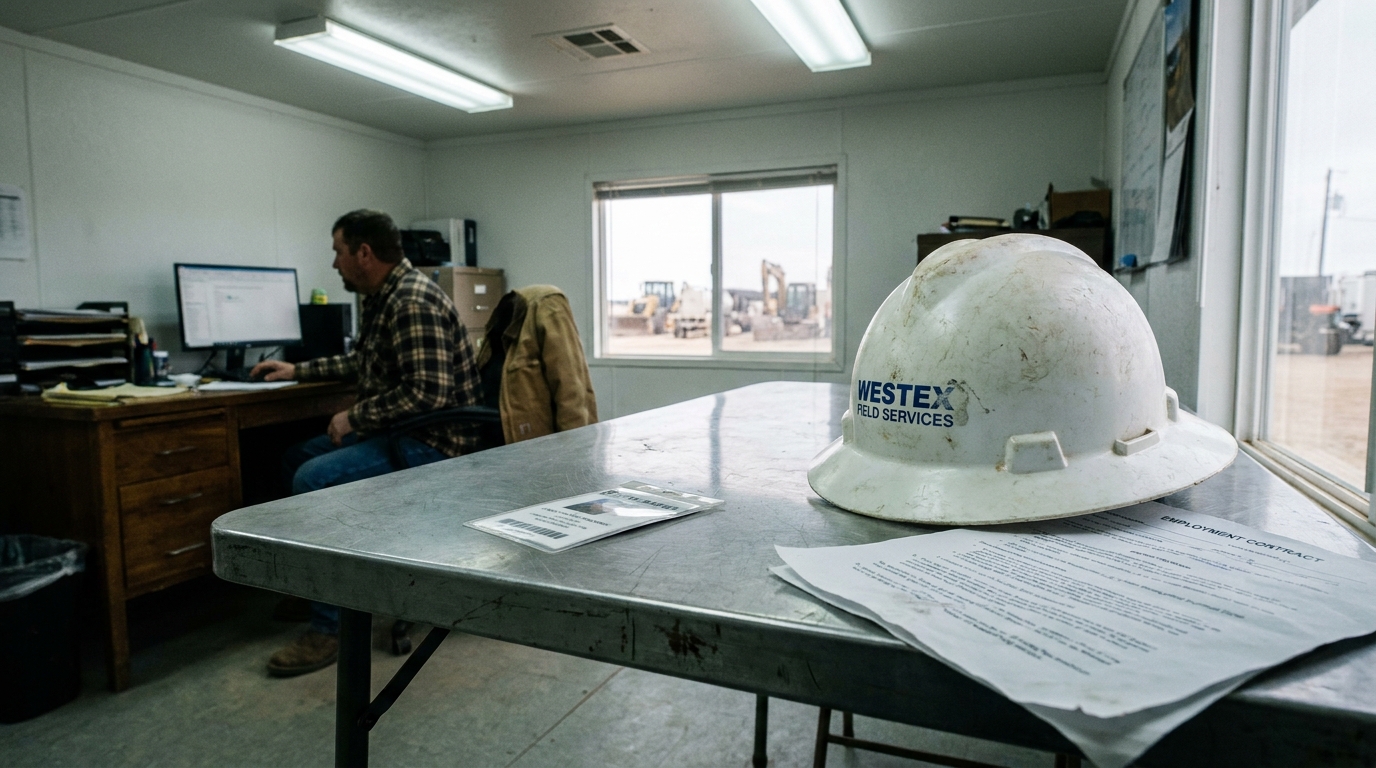
Defining the Borrowed Servant Doctrine Under Texas Law
The borrowed servant doctrine treats a worker as the employee of whichever company controlled the work, even if a different company signs the paychecks. Texas courts have long recognized that one employer can "borrow" another’s worker for a job. If one employer holds the right to control the details of work at the time of the accident, that controlling employer may be considered the "employer" for workers’ compensation purposes, a principle rooted in Sparger v. Worley Hospital, Inc., 547 S.W.2d 582 (Tex. 1977).
This matters enormously where a single rig may host an operator, a drilling contractor, a staffing company, and several vendors at once. The company asserting the doctrine carries the burden to prove every element.
💡 Pro Tip: After a serious oil field accident, write down which supervisor gave you instructions, whose equipment you used, and who set your schedule. These details directly feed the control analysis that drives borrowed servant disputes.
The Control Factors Texas Courts Weigh
Texas courts evaluate control using a right-to-control test, and in federal courts applying Texas law, the nine-factor Ruiz test from Ruiz v. Shell Oil Co., 413 F.2d 310 (5th Cir. 1969) serves as the dominant multi-factor framework. These considerations include practical, fact-specific questions about how the work was actually performed.
The recognized factors generally include:
- Who controlled the worker at the time of the injury
- Whose work the worker was performing
- Whether there was an agreement between the employers regarding control
- Whether the worker acquiesced in the work arrangement
- Whether the original employer temporarily terminated its relationship with the worker
- Who furnished the tools and the place for performance
- The duration of the worker’s employment with the borrowing employer
- Who had the right to discharge the worker
- Who had the obligation to pay the worker
No single factor is automatically decisive. In one decision, a longshoreman fell from a gantry crane while working for a stevedore at a port facility, illustrating how the doctrine reaches heavy-equipment and crush-injury scenarios common across Texas oil field operations. You can read the full reasoning in this borrowed servant appellate ruling interpreting the control test.
Why Contracts Do Not Automatically Decide the Question
A written contract assigning control is only one piece of evidence, not the final word. In Exxon Corp. v. Perez, 842 S.W.2d 629, 630 (Tex. 1992), the Texas Supreme Court explained that a contract between two employers providing that one shall have the right of control is a factor to be considered, but it is not controlling.
Actual conduct on the rig can override the paperwork. Texas courts have held that a contractual designation will not establish borrowed servant status as a matter of law where evidence shows the parties acted to the contrary. When the evidence conflicts on who truly directed the work, the question generally belongs to a jury, as the Court noted in St. Joseph Hosp. v. Wolff, 94 S.W.3d 513, 544 n.92 (Tex. 2002).
💡 Pro Tip: Do not rely on a supervisor’s casual statement about "who you work for." The legal answer depends on documented control, so preserve emails, safety briefings, and assignment records.
How the Doctrine Affects Your Right to Sue Third Parties
Even when one company is your statutory employer, Texas law still allows you to pursue other liable parties. Under the Texas Labor Code, an employee may seek damages from a third party who is liable for a compensable injury and may also pursue workers’ compensation benefits. This dual-path structure is critical in oil field cases involving multiple corporate defendants.
The company found to be your employer is generally shielded by workers’ compensation immunity if it carries coverage, while other contractors, equipment owners, or vendors may remain fully exposed to a civil lawsuit. To understand how these separate claims work together, review our explainer on third-party oilfield lawsuit Houston options.
| Recovery Path | Who It Targets | What It Generally Covers |
|---|---|---|
| Workers’ Compensation | Your statutory employer | Medical care and a portion of lost wages, no fault required |
| Third-Party Claim | Non-employer at fault | Full damages, including future care and lost earning capacity |
Texas workers’ compensation operates on a no-fault basis. Under Texas Labor Code § 406.031(a), an insurance carrier is liable for an employee’s injury without regard to fault if the worker was subject to the system and the injury arose out of employment. Once a court decides the borrowing company was your employer, that company’s carrier becomes responsible for benefits without proving negligence.
Subrogation, Reimbursement, and Self-Insured Operators
When you recover from a third party, the workers’ compensation carrier may claim a share through subrogation. Texas Labor Code § 417.001(b) provides that the carrier is subrogated to the injured employee’s rights, but its interest is limited to benefits paid, less the amount by which the court reduces the judgment based on the percentage of responsibility attributed to the employer. Texas courts have held that this reduction can shrink the carrier’s interest substantially and, in some cases, eliminate it entirely.
Important guardrails protect lending employers too. Under Texas Labor Code Chapter 417, an employer generally is not liable to a third party for reimbursement based on a judgment unless it executed a written agreement to assume that liability before the injury occurred.
Large Houston operators frequently self-insure their workers’ compensation obligations instead of buying a traditional policy. Texas Labor Code § 407.121(a)-(b) requires certified self-insurer status membership in the Texas Certified Self-Insurer Guaranty Association. Knowing whether the borrowing company is traditionally insured or self-insured affects which entity administers and pays your claim.
💡 Pro Tip: If your injury developed from chemical or toxic exposure rather than a single event, Texas Labor Code § 406.031(b) assigns employer status to the last employer in whose operations you were injuriously exposed.
Working With an Oilfield Injury Lawyer Houston Families Trust
An oilfield injury lawyer houston workers rely on can untangle which company controlled the work and which remains open to a civil claim. These cases often involve overlapping corporate defendants, disputed staffing arrangements, and life-altering harm such as crush injuries, burns, or permanent disability. Building the record early, before memories fade and equipment is repaired, is essential.
A seasoned Houston oil field accident attorney understands the limits of the system. Carriers and their agents who conduct safety consultations are shielded from certain tort claims under Texas Labor Code § 411.003(a)-(b), though they remain liable for benefits owed.
Damages frequently reach far beyond a paycheck. Catastrophic oil field injuries can mean lifelong medical care, lost earning capacity, and severe financial strain. If you are weighing your oilfield worker legal rights Texas provides, our oilfield injury lawyer Houston services page explains how we approach these high-stakes claims.
Frequently Asked Questions
1. Does the borrowed servant doctrine stop me from suing anyone?
Not necessarily. The doctrine generally only shields the company found to be your employer. Other contractors, equipment owners, or vendors may still face a third-party claim depending on the facts.
2. Who decides which company was my employer?
A judge or jury decides based on who controlled the work. When the evidence about control conflicts, Texas courts hold the question is for the jury rather than something a contract settles automatically.
3. Can I receive workers’ compensation and still file a lawsuit?
In many cases, yes. Texas Labor Code § 417.001 allows an injured worker to pursue benefits and separately seek damages from a liable third party, though carrier subrogation may apply to part of any recovery.
4. What if I work through a staffing agency?
Texas recognizes a dual employer concept. In Wingfoot Enterprises v. Alvarado, 111 S.W.3d 134 (Tex. 2003), the Texas Supreme Court treated a staffing agency worker as an employee of both the agency and the client for compensation purposes.
5. How quickly should I act after an oil field injury?
As soon as possible. Civil and administrative deadlines differ, and physical evidence on a rig can disappear fast, so early legal review is important.
Protecting Your Recovery After a Serious Oil Field Injury
The borrowed servant doctrine sits at the center of nearly every complex Texas oil field injury claim because it decides who is immune and who is accountable. Control of the work, not just contract language, drives that determination, and the outcome shapes whether you are limited to benefits or able to pursue full damages. For workers facing permanent injuries and mounting future medical costs, getting this analysis right is critical.
If you are searching for answers about oil field injury Houston Texas claims, the trial-ready team at Fibich, Leebron, Copeland & Briggs is prepared to investigate the corporate relationships behind your accident. Call 832-925-3015 or contact us through our secure online intake page to protect your rights and pursue meaningful accountability.